Sunroom
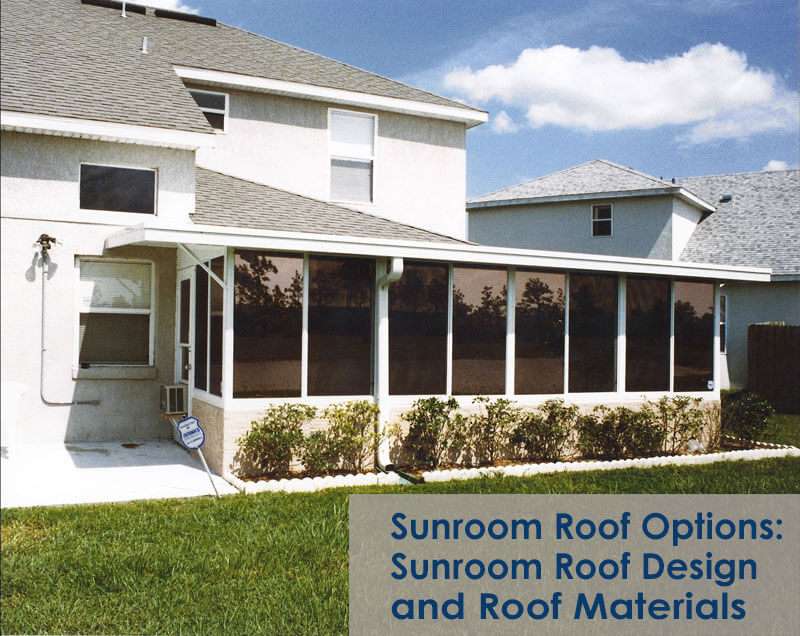
Building a sunroom comes with many decisions. If you already have patio space under your roofline, then you don’t have to give a lot of thought to the new roof of your sunroom or Florida room because the work is already done for you. However, if you are building a new sunroom, then you need to consider a roof type for your sunroom. This article will outline different sunroom roof options as well as the materials you can use for different sunroom designs.
Sunroom Roof Options
Florida Sunrooms, or Florida rooms, are a fantastic way to enjoy the Sunshine State’s natural beauty and add value to your home. The type of roof that best suits your sunroom depends on your house’s architecture, your own personal tastes and your budget. Here are the two main sunroom roof options:
Gable roofs
A perennial favorite that blends well with most architectural styles. A gable roof features two roof panels that are set at an angle to form a peak over the center support. Generally placed perpendicularly to a home’s exterior, it creates a classic look and offers the opportunity to enjoy a soaring cathedral ceiling inside your new Florida room.
Studio roofs
This incredibly simple roof type goes by many names, including a single-slope roof and a shed roof. An economical style that offers clean, neat lines and plenty of strength and stability. A studio roof features a single plane that slopes down from the existing house. This style works beautifully with both single- and two-story homes.
Sunroom Roof Materials
Next on the list is to decide what materials will be used on your new sunroom roof. This will have a huge impact on both its appearance and its functionality. What will best suit your needs? Shingles and aluminum roofing are the top options.
Using Aluminum Roofing for a Sunroom
At Dulando Screen & Awning, we encourage the use of insulated aluminum roof panels for sunroom additions. With Structall’s insulated aluminum panels, an exterior of high-quality aluminum encloses a foam core.
Aluminum roofing panels offer multiple advantages.
- Sunroom roof panels help to block the sun’s rays so that your new patio sunroom stays cooler and more comfortable.
- The insulated aluminum panels mute the clatter of rain falling on the roof so that a sudden downpour won’t ruin your peace and tranquility.
- Aluminum roofing also resists common pests like carpenter bees and termites.
- Insulated roofing panels won’t wilt in Florida’s hot sun, heavy rains or strong winds.
- They’re also available in various styles and finishes, so it’s easy to create a wide array of looks.
Dulando Screen & Awning is a family-owned and -operated Florida sunroom builder serving our neighbors since 1968. We are firmly committed to combining quality materials with expert craftsmanship to help Floridians create the outdoor spaces that they’ve been dreaming of. Our professional team is highly trained in design and construction techniques, and we thrive on using our skills for our customers’ benefit. Are you ready to learn more about sunrooms, sunroom roofs and insulated aluminum panels? To explore the possibilities and request a free estimate for your project, contact Dulando Screen & Awning today at 407-862-6060.
Sunroom
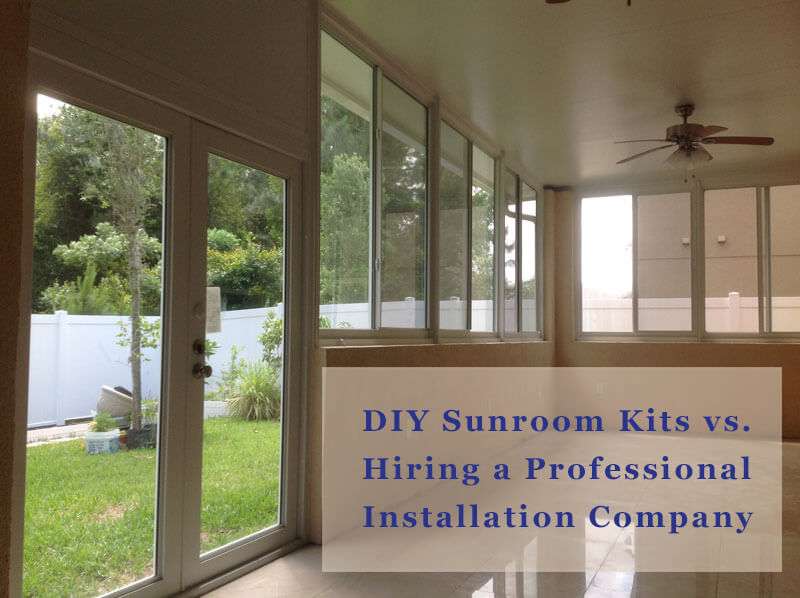
The welcome addition of a sunroom to your Florida residence allows you to enjoy the natural light of a beautiful summer day without the heat, noise and pests. Although it’s possible to use sunroom kits to build your own sunroom, it’s important to understand the differences between a DIY sunroom kit approach and a professional sunroom installation. Making a choice should be easier once you take into account your own abilities and the complexity of the project.
Some sunroom kits are very basic and others might have a few more features, but at the end ot the day, they are a kit based on someone else’s vision of a sunroom. Anything more complex than a kit will require more expertise than most homeowners possess. Here are a few items you’ll want to consider before making your decision.
Understanding Sunroom Kits
Sunroom Customization Options
If you choose to install your own sunroom using a kit, you’ll have to stay with the design parameters of the kit. Hiring a professional sunroom contractor, however, will let you choose any design you want. The contractor can offer sunroom plans that will complement the design aesthetics of your house and have the features your family needs in a sunroom. You’ll also have more freedom to choose materials for the project, allowing you to use materials usually not included sunroom kits, such as insect-proof screens.
The Permitting Process
The requirements for a permit for building a sunroom vary depending on your city, but many areas do require a permit to build a sunroom. If you choose to build your own sunroom, you’ll need to deal with the permit on your own. This process can be intimidating, especially if you’re new to it. If you opt to hire a professional team to build your sunroom, they will take care of the permitting for you.
Safety Concerns
Building a sunroom from a kit may eliminate some work for you, but you’ll still be responsible for all of the heavy lifting. If you’ve never tackled a DIY project beyond painting walls and replacing a bit of drywall, some of the sunroom kits might be more challenging than you anticipate. You’ll probably need some extra hands to help. If you must rely on inexperienced family members for assistance, it might be wise to rethink the idea to prevent anyone from getting injured. There will be lifting and installing of the walls, electrical work and installing windows. The goal is always to keep everyone safe.
Managing a Timeline
Unless you have unlimited free time, building your own sunroom addition will require you to sacrifice time spent on other aspects of your life. If you work full-time, it may take several weekends to complete the project. Hiring a reliable sunroom contractor, however, will ensure that your project is done on schedule and won’t eat up any of your own free time.
Sunroom Prices
If you have a limited budget for a patio sunroom and have some experience with DIY projects, opting for a sunroom kit may be right for you. Using a kit and doing your own work means you won’t have to pay for labor. However, it’s important to remember that you get more than just labor when you hire a contractor. Saving up to have a professional team create your project will give you more return by allowing you to have a custom design that complements your home.
Dulando Screen & Awning specializes in patio enclosures, which, of course, includes sunroom installations. For over 50 years, Dulando has been building sunrooms to the specifications of their customers. To learn more about our work and what we can do to make your summers more pleasant, please contact us today at 407-862-6060 or fill out our online form and one of our design consultants will schedule a meeting with you at your home.
Sunroom
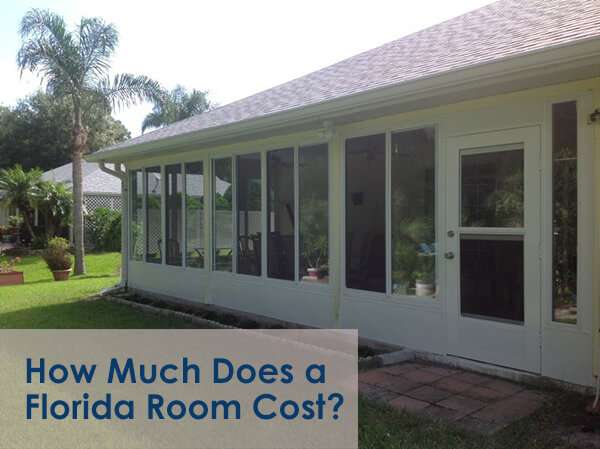
Whether you call it a Florida room, a sunroom or a Florida sunroom, building one of these room additions can expand your living space. Florida rooms make it easier to enjoy the beauty of the outdoors comfortably and increase your home’s value. I’m sure you’re not surprised when we tell you that “How much does a Florida room cost?” is the number one question we receive.
That answer varies widely depending on the particulars of the project. We’ve outlined a few factors that influence the price tag of a sunroom addition.
The Starting Point
At its most basic, a Florida room requires a floor, walls, windows and a roof. When building a Florida room from the ground up, you’ll need to build all of these features. When trying to determine a Florida room cost, you’ll have to factor in the cost of the materials and labor required to do so. However, starting with a blank slate does allow you a fair amount of freedom in matters like size, placement and design.
If you have an existing patio, you have a head start on your new Florida room. How does converting an existing structure affect the cost of building a Florida room? While the transformation will require some additional foundation work, your savings can be substantial. When converting an existing patio to a Florida room, you already have the foundation, floor and roof. All you need to add is framing for the walls and windows and maybe some additional electrical outlets.
The Size of a Florida Room
Bigger isn’t always better, but it is generally more expensive. Since a larger Florida room tends to require more materials and additional hours of labor to complete, the price tag will be a bit heftier. When deciding how large your new addition should be, think about how you intend to use the space, your budget, and the scale of your home and yard.
The Roof
When building a Florida room, you’ll be able to choose from several roofing options. Some homeowners choose to top their new addition with an awning. While they are less expensive to purchase, they aren’t as durable as other kinds of roofs. Although they cost a bit more upfront, aluminum roof panels or traditional shingles may be a better buy in the long run.
The Windows
Since they make up the bulk of the walls, windows are a major consideration in the construction of a Florida room. Acrylic window panels are less expensive and lighter. However changes in temperature can lead to bowing, exposure to ultraviolet rays can trigger yellowing and acrylic is easy to scratch. Glass windows are pricier and heavier, but they provide more insulation and increased durability over time.
The Amenities
Some Florida rooms are extremely simple. Others come equipped with marvelous design features like cathedral ceilings, ornate trims, heated floors and gorgeous fountains. Many fall somewhere in the middle with amenities like ceiling fans, lights and electrical outlets. Keep in mind, before installing a ceiling fan in a patio enclosure, notify the patio contractor to include a fan beam in the insulated roof for support and concealed wiring.
Does a Florida room cost more when more bells and whistles are incorporated? It does, but working with an experienced designer can help you to get the most bang for your buck.
Additional Reading: Building a Sunroom
What does your perfect Florida room look like? Whether you have a clear image or the picture is a little fuzzy, Dulando Screen & Awning can help you bring it to life. With our experience and commitment to quality, you can count on us to create something that you and your family will be able to enjoy for years. Contact us today at 407-862-6060 to explore our services and request a free quote.
Patio Enclosures, Sunroom
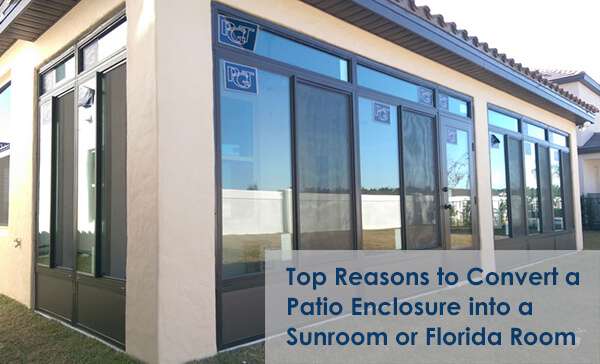
The patio is so much more than just another part of the house. It can be a relaxing escape after a long day at work, a casual dining room for laid-back meals or a special place to gather with family and friends. It’s one of the few truly multipurpose rooms that bring everyone together. Whatever your patio space means to you, you can get even more of a good thing when you convert a patio enclosure info a Florida sunroom you can use all year long.
Boost Property Value
There’s a good reason why a patio sunroom is also known as a Florida room. In the Sunshine State, where warm weather is a given, a practical outdoor space is a must. While a basic patio screen enclosure is a good start, upgrading it to a professionally designed sunroom can go a long way toward permanently increasing the long-term price of your home.
Improve Curb Appeal
Besides increased functionality, one of the biggest reasons why building a Florida sunroom is such a reliable way to boost property value is added curb appeal. Because it’s one of the first things you’ll see from the outside, a well-made, high-quality extension makes for an easy way to give your home’s exterior a major style makeover.
Never Let the Weather Ruin Your Plans Again
While a patio screen enclosure is great for keeping the bugs out of your dinner, what do you do when the weather is not ideal? Soaring temperatures, occasional cold spells and frequent passing storms can instantly put a damper on what could otherwise be an ideal day to use your patio. When a homeowner is looking to convert a patio enclosure into a sunroom, it usually has to do with wanting to use the space 365 days in the year. Sunrooms are typically built with glass or clear vinyl windows, which means that unpredictable weather is taken out of the equation. No more changing your plans depending on what the forecast tells you. You’ll be able to enjoy the best of what Florida has to offer without compromise.
Save the Environment and Your Money
Better climate control also translates to significant financial savings. Florida Sunrooms can dramatically lower cooling costs by preventing cold air from escaping, and on those days when the weather outside is perfect, it’s easy to throw the windows open for natural ventilation. By reducing your overall energy footprint, you’ll protect both your wallet and the environment.
Extend Your Living Space
Life is unpredictable, and you never know when you might find yourself in need of a little extra space. Depending on your changing circumstances, your sunroom can be turned into an office, an outdoor playroom, a guest bedroom, a storage unit or a temporary base for a new business. The possibilities are endless.
These are just a few of the reasons why homeowners decide to convert a patio enclosure into a sunroom. Keep in mind that turning your screened patio enclosure into a Florida sunroom is no easy task. To maximize the benefits above, it’s best to work with experienced contractors who are familiar with the unique challenges of Florida’s building codes. From stronger structural stability to flawless performance to creative aesthetics, a professional touch can make all the difference.
Additional Reading: Convert a Patio Enclosure to a Sunroom
Put our 50 years of experience to work with you. Call Dulando Screen & Awnings to consult with our in-house design team about converting your patio into a Florida sunroom. Give us a call at 407-862-6060 or fill out our online request a quote form.
Florida Room, Sunroom
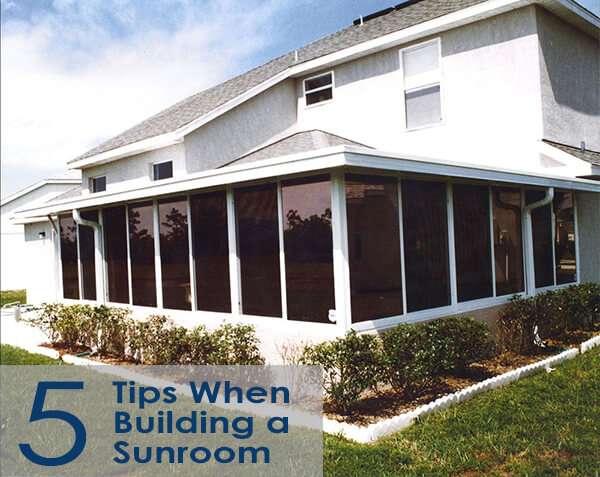
You know the benefits of building a Florida Room, but do you have a clear understanding of how to get started? Dulando Screen & Awning has been a high-quality custom sunroom builder in Florida for more than five decades. We’re happy to share our insight. Here are the top tips that you’ll want to keep in mind when building a Florida Room or sunroom and hiring a sunroom contractor.
Building a Sunroom Involves:
1. Meet with your contractor to get an accurate estimate.
When investigating Florida sunroom costs, don’t settle for an estimate given over the phone. To provide an accurate estimate, a reputable contractor will want to meet with you, discuss your options, review materials and measure the space. If a contractor doesn’t require at in-home consultation before providing an estimate, then you’ll probably find yourself receiving a low-quality sunroom, a higher-than-expected bill or both.
2. Check your foundation.
When building a Florida room, contractors can often incorporate an existing porch, patio or deck if the structure is up to code. A reputable contractor will review your options with you and factor the cost of any improvements required into your estimate. Likewise, if you don’t have a suitable porch, patio or deck, they’ll include the cost of constructing the appropriate foundation in your estimate. If you have flexibility in where you can place your sunroom, you might want to read out post “Things to Consider When Adding a Sunroom”
3. Remember that building materials matter.
Price and value are not the same. Cheaper materials may keep the price tag for a patio sunroom addition low, but quality materials will often offer benefits that make them a better value in the long term. For example, when building a Florida room that is not under the existing roofline of the house, a roofing option is to use Structall Snap-N-Lock Insulated Panels. While they might make the initial cost of a Florida sunroom a bit higher, they far outweigh the cost because they:
- Make it easy to get the look you want. Structall Snap-N-Lock Insulated Panels are available in several low-maintenance finishes and are suitable for a variety of floor plans and roof styles.
- Help you stay comfortable without sending your energy bill soaring. These clever insulated panels are designed to be energy efficient.
- Withstand Florida’s gusty winds and strong sun. The panels handle high winds without flinching, and ultraviolet destruction is minimal because the sealant is inside the panel.
- Allow for special features. Skylights, fans and other features can be installed without issue.
4. Pay special attention to the windows.
While all the materials used to construct your new addition matter, sunroom windows are especially important. After all, when building a Florida room, the windows are clearly a major feature. When selecting screens and windows, consider factors like durability, privacy and glare. There are three main types of Florida sunroom windows: Acrylic, Glass & Vinyl
5. Choose your contractor carefully.
Ending up with a shoddy sunroom is bad. Finding yourself facing a lawsuit because your sunroom builder didn’t have the proper insurance is even worse. Hiring the wrong Florida room contractor can be a costly mistake, so choose yours carefully. Not all patio contractors understand the nuances of building a Florida room. Look for a reputable professional sunroom contractor who has the right licensing and insurance and a lengthy list of satisfied clients.
Additional Reading: Building a Florida Room
Dulando Screen & Awning is proud to serve Orange, Seminole and Volusia counties. If you’re ready to expand your living space and add value to your home with a new sunroom addition, we’ll be happy to build the sunroom of your dreams. Contact us today to request a free in-house consultation.
If you’re not ready to start building a Florida room today, but need more information, please download our free buying guide below.
Sunroom
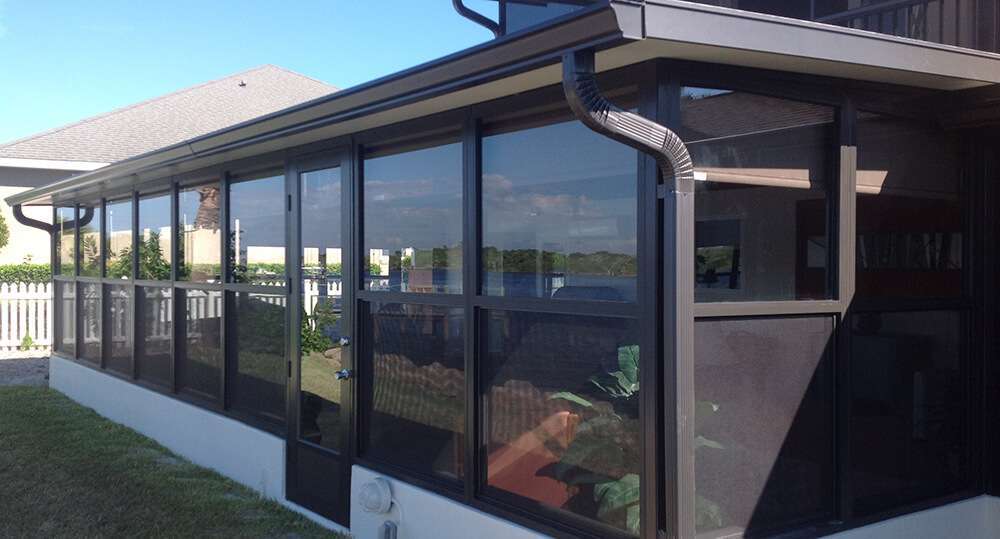
When building a sunroom, you can either build the new structure under your roof line or behind the home. If you build a sunroom as an extension of your home, it will need a roof. Here are a few options to draw out what type of roof you might like for your new sunroom.
1. Your Existing Porch Roof
If you build a sunroom under the current roofline, then you won’t have to start from scratch. Make the most of what’s already there by enclosing a covered porch or breezeway. Keep it easy on the budget with a simple, screened-in effect, or upgrade the area to full sunroom status with glass and vinyl enclosures. Most clients explore the difference between screen and vinyl windows.
Enclosing an existing patio area into a new sunroom also opens up surprising design opportunities. Extend shaded comfort with awnings from exterior eaves or let in more light with gable transoms. Half-wall and window combinations work very well with existing porch and roof structures too.
 2. A Simple, Single Slope
If your patio is not under the existing roofline, then a new patio must be built. One of the most popular roof styles for a sunroom is a simple, single slope roof. A single slope roof offers maximum strength and stability.
But these aren’t the only reasons to love this roof style. The single slope stands out as an economical choice too. Its single pitch slopes away from the house with clean, contemporary lines at an angle height that is up to you and your contractor. While two-story homes can accommodate a steep slant, the most popular pitch is still the studio roof with its modest slope.
2. The Traditionally Elegant Gable
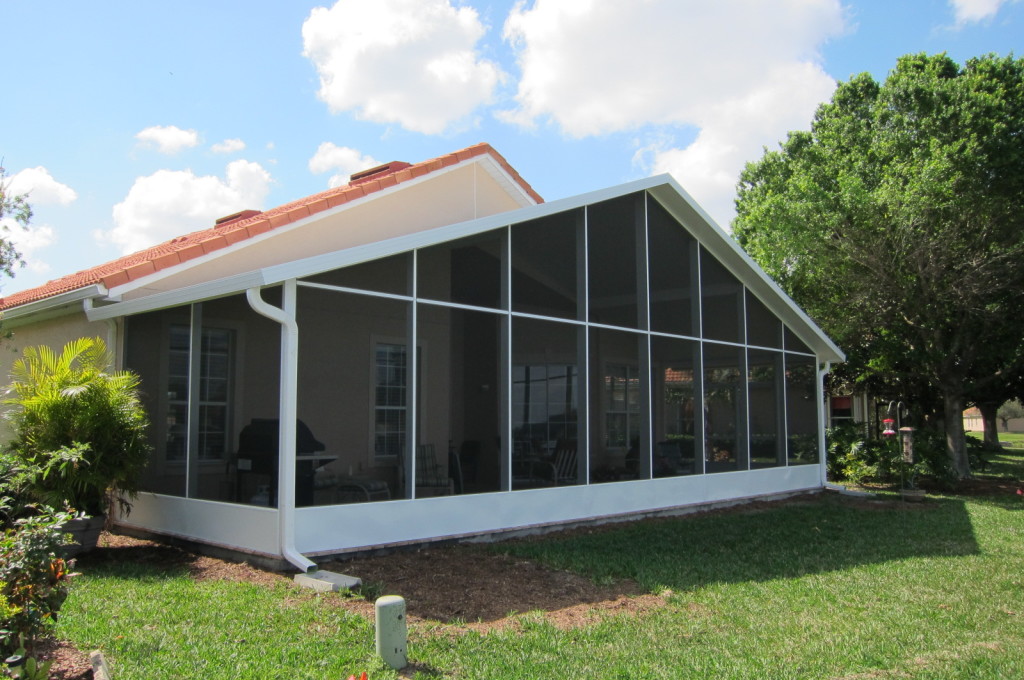 Like its single slope cousin, this roof style works with screened-in and glass-paned sunrooms. Its double-paneled design with center-beam support typically runs perpendicular to your home’s exterior.
If the goal is to create a new sunroom in an A-frame form that blends beautifully with traditional architectural lines, then you definitely want the gable-style roof. You can modify the exterior gabled area with transom windows, decorative trim work or extensions of the sunroom’s framing. If you want to relax under a cathedral ceiling, make this your roof style of choice.
Usually, the next step is to determine the price of a patio sunroom. Here are some price factors of building a sunroom.
When you picture the perfect roofing style crowning your new sunroom, things really start to look up. We enjoy transforming your ideas into real plans and solid construction. If you’d like more information about our process and free in-home consultations, just give us a call today at 407-862-6060.
Page 6 of 8« First«...567...»Last »