Patio Enclosures, Screen Enclosures
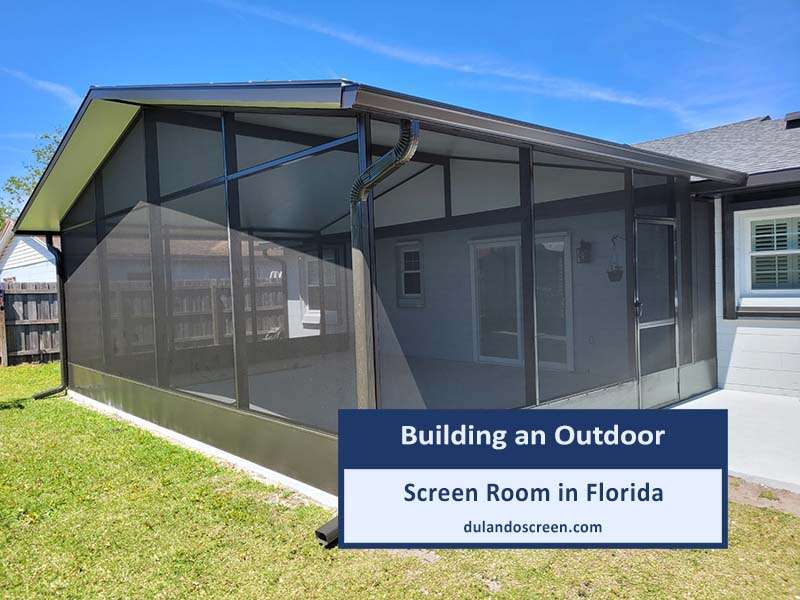
Outdoor screen rooms are ideal when you want to enjoy the outdoors in Florida without pesky nuisances like insects, debris, or excessive sun. These structures allow you to soak up the pleasures of being outside, and they provide enhanced comfort, greater privacy, some protection for children and pets, and a bit of shelter from the elements. What goes into building an outdoor screen room? As your screening expert in the Orlando area and most of central Florida, Dulando Screen & Awning is delighted to guide you through the process.
Components of an Outdoor Screen Room
Types of Screen Room Frames
Like a skeleton, the frame serves as the support structure for your screen room enclosure. Popular options include:
- Traditional frames are meticulously crafted with sturdy aluminum beams. This user-friendly, low-maintenance material is a fantastic fit for Florida. Lightweight but strong, it resists pests and corrosion with ease. You’ll enjoy an attractive frame that’s available in various colors.
- Panoramic frames are the perfect way to highlight a gorgeous view. Ingenious engineering and robust aluminum beams allow supports to be placed farther apart, so there’s less interference with your view. In fact, the distance between supports can be up to 24 feet.
Choosing a Screen Room Roof
What kind of roof will top your screen room? Before you decide, talk with your screen room contractor. There are many possibilities and many factors that can shape your choice. For example, you’ll want to weigh your preferences, your home’s design, the layout of your screen room, and your budget. The kind of screen room you’re building is also a consideration. Patio covers, screened porches, and Florida rooms often have solid roofs. In contrast, pool screen enclosures normally feature screen roofs.
When envisioning your outdoor screen room’s new roof, it may help to think of popular roof styles:
- Gable roofs look like a triangle. Two sloping sides meet at the top to form a ridge.
- Mansard roofs have flat tops with two slanted sides. It’s a strong design that creates lots of space.
- Dome roofs use arches to create an airy but durable structure.
- Single-slope roofs have one slope that’s angled in one direction.
- Custom roofs are designed to meet the unique needs of a specific situation.
Quality Screen Materials
You can’t achieve excellent results without quality materials, so Dulando always uses Phifer screening. These amazing screening materials deliver serious advantages. Attractive and durable, they’re great at keeping insects and debris out. Do you have pets or small children, we recommend Phifer Pet Screen. If you’re looking to reduce the suns UV rays, great options are Phifer SunScreen and Phifer SuperSolar. Talk to your design consultant about your needs and we’ll find the right screen materials for your new outdoor space.
The Extras
The extras are the things that will make your patio screen room the place your family wants to be. They’re the details that transform your screen enclosure into an outdoor living space. It could be electrical outlets, lighting, skylights, or ceiling fans. It could be high-quality hardware that’s placed for maximum function as part of your screen room installation. What features are you seeking? Whatever they are, discuss these extras with your screen room design consultant. Many features need to be built during fabrication of the enclosure instead of during installation.
At Dulando Screen & Awning, we offer free in-home design consultations so you can fully explore the possibilities with an expert. We encourage you to dive deeply. We take pride in providing superior service and excellent screen rooms that bring families years of joy, so we want to get things right. Contact Dulando Screen & Awning today to discuss your outdoor screen room.
Patio Enclosures, Screen Enclosures
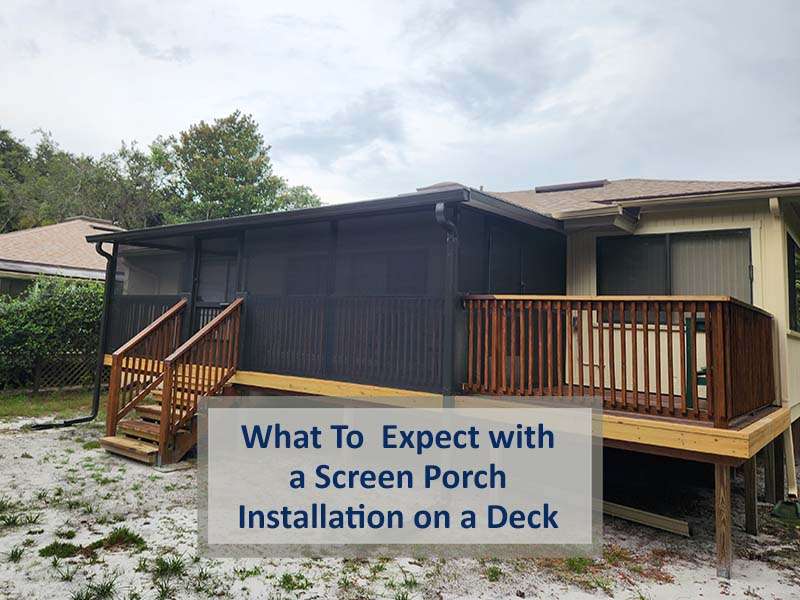
Decks are delightful, but upgrading to a screen porch provides greater protection from common nuisances like biting bugs and bad weather. If you’re interested in a screen porch installation to enjoy more shade, privacy and security, here’s how to start the process.
Building a Screen Porch on a Deck
What Do You Want
How do you currently use your outdoor living space? Once you have a new screened-in porch, what else do you need to function comfortably? Will you need features like electrical outlets, lighting, or skylights? Do you still want an outside area for grilling or other activities best done under an open sky? Getting your ideas together first makes planning and designing smoother. It also helps you avoid the cost of expensive change orders during construction.
Inspect the Deck’s Foundation
Any new structure requires a solid foundation. A screen porch is no exception. Before moving forward, evaluate your existing deck’s foundation and overall condition. When considering deck enclosures, it’s vital to remember that adding a roof and screened walls to a deck also adds significant weight. Assessing the existing structure thoroughly is imperative to see if it is up to the task. If not, you’ll know you need to plan for repairs, modifications, or replacement.
Decide on Sizing for the Screen Porch Enclosure
How big will your new screen porch be? The answer isn’t necessarily determined by the size of your existing deck. You could use all or a portion of it. You could add on or tear it down and start over. For the best results, your wants, needs, and budget should be the deciding factors in the size of your new enclosure. After all, the goal is to create a quality screen porch that fits your lifestyle.
Determine Your Budget
Calculating what you can afford allows you to determine the boundaries of your project. It’s fun to dream about the possibilities, but it’s wise to stay within a reasonable budget. Determine the features you want on your screened-in patio first. That way, you’ll be ready to talk to a reputable screen enclosure contractor. These professionals are familiar with all the ins and outs of converting a deck to a screen porch, so they can help you make the most of your budget.
Ensure Approvals Are Obtained
While you’ll want the final say on the design, your approval isn’t the only one necessary. If you live in an area with a homeowner’s association, be aware that you may need your HOA’s approval for an improvement project. In addition, Florida requires construction permits. Inspections may also be necessary if you are incorporating electrical work. A reputable contractor will often arrange permitting and inspections, but checking with them is wise.
Prepare for Screen Porch Installation
Screen enclosure installations are quite significant, so prep work paves the way. For starters, utility companies will be out the preceding week to mark all public utility lines. Are private lines in the installation area, like irrigation or service lines, running from your home to outbuildings? It is your responsibility to mark them. You’re also tasked with clearing personal property of the area. In addition, you may also be asked to point out where materials for the job can be placed. Materials for deck screens are often delivered a day or so before the installation.
We realize this seems like a lot to consider. That’s why you can depend on Dulando Screen & Awning to walk you through the process every step of the way. We’ve been doing this since 1969, so lean on our experience. If you’re interested in a screen porch installation on a deck, our team will be delighted to help you make the change. To explore your options, contact us for a free in-home design consultation.
Pool Screen Enclosure, Screen Enclosures
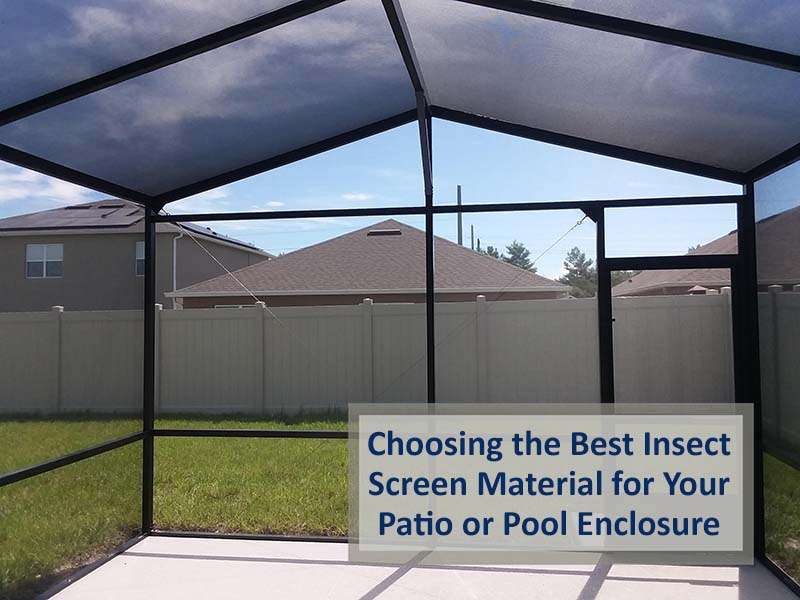
Have you ever noticed when you have too many choices, it can be overwhelming? We’ve been told that’s how some homeowners feel while looking at screen options for their enclosure. Choosing the best insect screen material for your patio or pool enclosure may seem daunting, but there is usually one clear winner after providing an overview of each type. It’s our pleasure to explain the different types of screens to see which insect screen material is the best for you.
Advances in screen material technology have opened new possibilities and created new choices. Different screen materials can shield you from insects, protect you from the sun, and offer greater privacy. Some screen materials are designed to withstand the exuberance of children or pets. Choosing the best insect screen material for your patio or pool enclosure is a matter of weighing your priorities.
Description of Different Screen Materials
Aluminum Screening
Aluminum insect screen is rigid but reasonably durable. However, it can have issues with creasing and denting when under pressure. It’s generally available in shades, including black, charcoal, and bright aluminum.
Bronze Screening
Bronze screens are often selected for historic homes to maintain their integrity. Their visual appeal can be striking. While the material may start with a fresh, gold glow, it ages to a burnished, antiqued finish, which is why it’s the perfect choice for historic homes.
Stainless Steel Screen
Stainless steel screen mesh is known for its crystal-clear visibility, excellent airflow, incredible tensile strength, and longevity. However, in Florida’s climate, stainless steel screen mesh will rust.
Fiberglass Screen Material
Why is fiberglass the most popular screening material? It doesn’t corrode or stain, which makes fiberglass insect screens an excellent choice for pools, patios, places with high humidity, and coastal settings. It also has a tighter screen mesh, so it excels at keeping bugs out. In addition, fiberglass screen material comes in various colors but still allows for unfettered viewing, so you can see everything clearly through the screen.
Vinyl-coated Polyester Screen
Polyester has long been appreciated for its ability to resist tearing and fraying. They’ve created an array of highly durable screening products by coating this versatile fabric with vinyl. When you select vinyl insect screens, you get weather-resistant screens that are hardy enough to withstand excitable children and pets.
Quality Insect Screen Material
Phifer Screens
At Dulando Screen & Awning, complete customer satisfaction is our top priority. To achieve that, our team of talented designers, skilled fabricators, and dedicated installers uses only the absolute best materials. When it comes to screening, we use Phifer Screens. An undisputed leader in the screening industry, Phifer consistently offers innovative screening materials that exceed customer expectations.
Which insect screen material is the right choice for your next project? As experts in screening and creating superior outdoor living spaces, the Dulando Screen & Awning team is ready to assist you. If you have additional questions about insect screens or other types of patio screens, please call us. We’d be happy to help you explore the pros and cons of various screening materials. Reach out to discuss your options or schedule a free in-home design consultation today.
Screen Enclosures
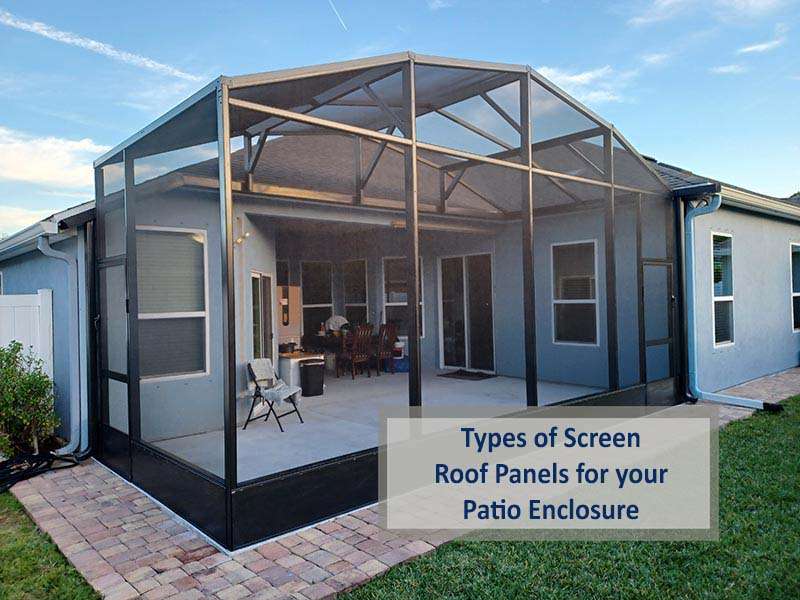
Screen roof panels are an exciting option when planning a patio enclosure. Exploring popular roof styles and the best materials for the job can provide welcome inspiration and help you identify your favorite look.
Discovering Screen Enclosure Roof Designs
If you’ve been shopping for screen enclosures, you’ve surely noted that these multipurpose rooms are far from boring. These custom structures come in a wide array of shapes and sizes, and stylish roofs of all kinds top them. The most popular types of roofs include:
- Gable: A timeless design that appears in neighborhoods everywhere, the gable is instantly familiar. Two sloping sides meet at the top to form a ridge. This produces a triangular shape. It’s structurally sound and appealing because its slope sheds water and debris easily.
- Dome: Airy and elegant, a dome rises above a structure in a series of arches. These arches offer benefits inside and out. They make the interior seem more spacious while the exterior enjoys excellent wind resistance.
- Mansard: While people may not know its name, they can appreciate the mansard’s striking silhouette. With a flat top and slanted sides, it delivers an impressive mix of spaciousness and strength.
- Hip: A hip roof may be trendy, but it’s also a defined style. A mix between a mansard and a gable roof, it’s a roof where all four edges slope down from the top peak. These roofs are more complex to create than flatter roofs, so you’ll need to find a trusted builder. However, they’re also more stable, more spacious, and better at shedding water and debris.
- Custom: Sometimes, a custom screen enclosure roof can be the perfect fit. An experienced screen enclosure contractor can create a specific vision for your screen room. Maybe you want something that mimics your roofline? The sky is the limit.
Designing With Screen Enclosure Panels
Picking the shape of your roof is a great start, but what material will bring it to life? It’s much easier to picture your new screen roof enclosure accurately when you can imagine both the roof’s style and the type of screen roof panels that it’s made from. At Dulando Screen & Awning, we know that quality materials are essential for superior results, so we always use premium supplies. For screen room roof panels, we generally recommend two options.
Since the roof takes a direct hit from the sun and debris, it’s important to use a screen that will withstand these elements. Dulando recommends a 20/20 screen for added protection. The 18/14 screen is the basic screen that will offer protection against the outdoor elements. However, if you want added protection, we recommend no-see um screen material of 20/20 mesh. This means there are more squares per square inch. This is especially important if you want to minimize no-see-ums and falling debris.
Phifer Super Solar Screen blocks up to 90% of the sun’s daytime heating. That provides increased comfort, saves energy, and protects furniture from fading. In addition, this durable fiberglass fabric offers exceptional outward visibility while delivering enhanced privacy.
We hope we’ve given you a better understanding of what you can do with a screen roof. If you’d like to discuss your project further, call us. We’re happy to come to your home and provide a free estimate. Put our experience to work for you.
Screen Enclosures
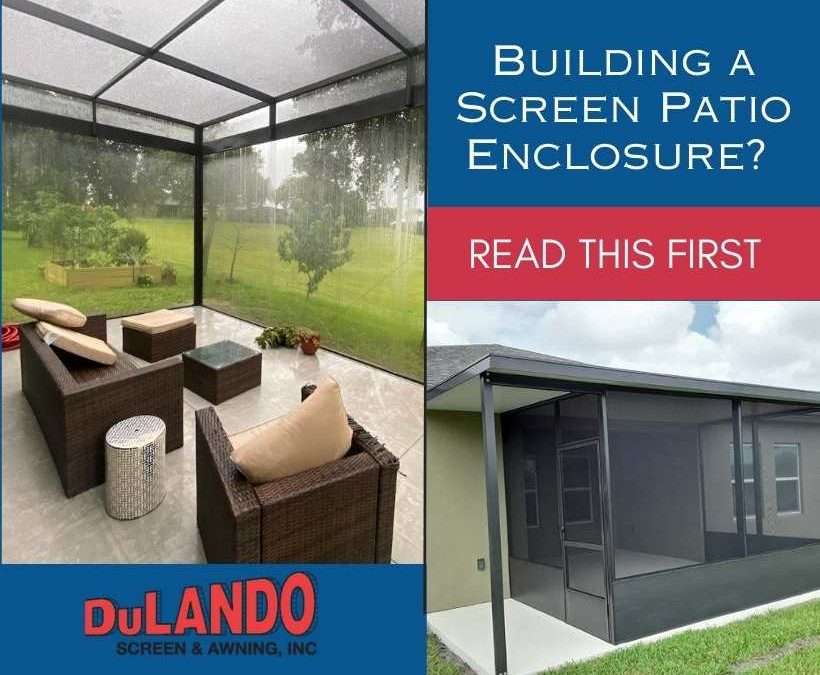
A screen patio enclosure perfectly balances outdoor living space and indoor comfort and protection. You enjoy the beauty and freedom of being outside. At the same time, you’ll have just enough shelter from the elements and common outdoor nuisances. When you’re building a screen patio enclosure, here are a few things to know.
Consider the Advantages of Custom Patio Screen Enclosures
With custom screen enclosures, there’s no need to settle. Opting for a custom enclosure designed and built by an experienced screened enclosure contractor means that you get an enclosure that’s tailor-made for you, so it matches your property, priorities, and price range. Ultimately, choosing a custom enclosure is an excellent strategy to maximize the return on your investment.
Let’s Explore the Types of Screened Enclosures
There are numerous types of patio enclosures to ponder. These include:
- Lanai enclosure
- Frame-in Enclosure (under your roofline)
- Screen enclosure
- Extended screen enclosure
- Screen room
- Screen patio enclosure
- Screen porch
- Screen pool enclosure
Patio Enclosure Materials Make A Difference
A quick walk through any neighborhood makes it clear that plenty of materials are available to build with. Which ones are the right choice for your new enclosure? From foundation to fasteners and screening to roofing, materials matter. They’ll impact the look and initial cost of your new addition. They will also factor into how much time, money, and effort you’ll spend maintaining it. In addition, they’ll play a role in its lifespan.
Top Questions When Building a Patio Enclosure
Masterminding the perfect patio screen installation takes a commitment to quality, experience, and skill. Your contractor will need your input to ensure you build the ideal screen enclosure for you and your family. Your thoughts and desires are vital for the design process, so be ready to answer questions:
- How do you want to use your enclosure?
- Will you need additional features like ceiling fans, outlets, or skylights?
- Where do you want to locate your enclosure? Will it be attached to the home?
- Do you have dimensions or a floor plan in mind?
- Have you thought about materials? Are you trying to match the aesthetics of your home?
- Is easy maintenance a priority?
- Do you have pets or small children?
- What is your budget?
An experienced contractor will guide you as you explore options so that you’ll understand the pros and cons of the various possibilities. Their insights can help you balance needs and wants and aid in sorting out what choices make the best use of your budget.
Prepare for the Installation Process
Installing a quality product takes time. Arrangements will need to be made, and permits will need to be acquired. Sometimes, HOA approval is also necessary. After all of the permits is the fabrication. Thankfully, much of the fabrication is done offsite to help with costs and scheduling. Once construction begins, we’ll need to deliver the materials to your home for assembly. Take the time to talk with your contractor so that you’ll know what to expect. Some disruption is almost inevitable when building screened patio enclosures. Your contractor will be able to give you a basic timeline so that you can prepare.
For over 50 years, Dulando Screen & Awning has been crafting top-quality screened enclosures for Florida homes and businesses. When you’re ready to build a custom screen patio enclosure, our team will help you create an outdoor living space you can enjoy for years. Contact Dulando Screen & Awning today to set up a free in-home consultation to discuss your project.
Screen Enclosures, Sunroom
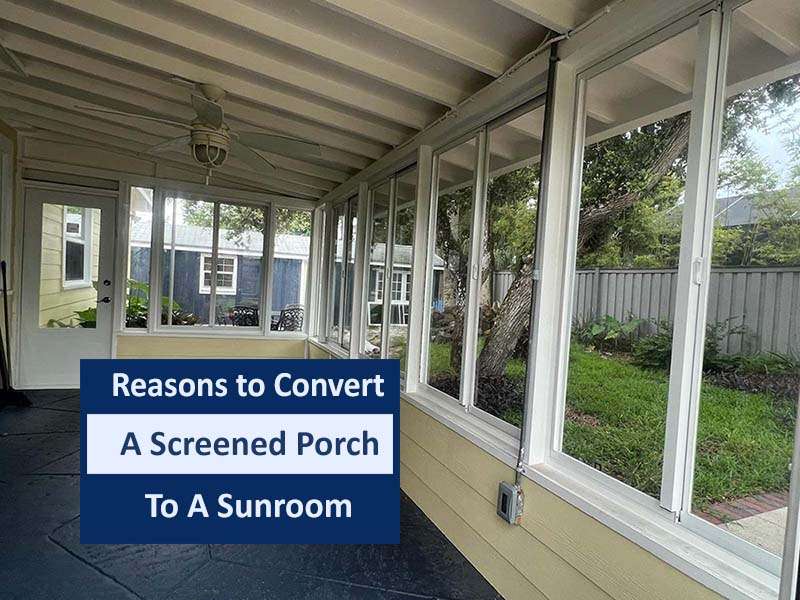
How do you gain more indoor living space without expanding the footprint of your home? The solution is elementary. Convert a screened porch to a sunroom. While porches and patios provide pleasing places to linger and enjoy the natural beauty of the Sunshine State, a sunroom conversion can transform the space into a place that makes the best of both worlds. There are several excellent reasons to explore a porch or patio-to-sunroom conversion.
Patio to Sunroom Conversions Will
Boost Durability
Enclosing a patio can provide protected spaces to enjoy the outdoors, but their protection can be somewhat fragile. When you turn a screened-in porch into a sunroom, you’ll enjoy a stronger defense from the elements with less worry. After all, screens can be vulnerable to rips and snags. The quality windows recommended for modern sunroom walls are much more durable.
Improve Temperature Control
A patio is a perfect place to enjoy a pleasant day. It can also offer shade when temperatures start to rise. However, sunrooms give you even more control. Their windows allow you to enjoy a clear view of the natural world around you and maintain a comfortable temperature within the glass walls of your sunroom.
Sunroom Windows Reduce Noise
So many homes are built so close together it’s hard to get some privacy. Whether you want to keep annoying neighborhood noises out or keep your conversations private, sunroom windows will help. Many sunroom windows are double pane, while other than the windows and screen that allow fresh air. Either way, windows fulfill your wishes.
Reduce Pollen
Florida may be called the sunshine state, but we are invaded by pollen for those few weeks in the spring. Yes, Florida has a pollen season. LOL, Screen enclosures do keep unwanted elements out of your patio area, but they are no match for pollen. Pollen still gets in every part of our outdoor spaces. However, when you convert your screened room to a sunroom, you block out the pollen and can continue enjoying your patio without wiping everything down.
Eliminate Environmental Irritants
Screened patios allow us to enjoy our backyard view while keeping out pests, and other environmental irritants. But how do lizards get inside our screen rooms? It’s a mystery. Even high-quality screens allow some of these persistent annoyances to infiltrate your screened porch. When you convert a patio to a sunroom, the glass windows create an effective barrier against environmental irritants. Pests and other problems will stay outside. Your new sunroom and its contents will be protected.
Expand Your Living Space
A sunroom has incredible potential since it will also be climatized. Unlike a screened porch, the sunroom will be cooler and more enjoyable 365 days a year. Your use of the space is limited by your imagination. You can create a relaxation space, a den, an exercise room, an office, a dining area, a playroom for the kids, or all the above. Don’t forget to host a dinner party as the sun is setting. The possibilities are endless.
Increase Your Home Value
Real estate agents are always touting the importance of curb appeal, and there’s no doubt that a striking sunroom is an attractive feature that’s likely to charm prospective buyers and find favor with home appraisers. Plus, sunrooms are a room addition, adding square footage to your home’s interior, providing greater value.
Are you Ready to Convert a Screened Porch to a Sunroom?
Sunrooms deliver the perfect balance of indoor comfort and outdoor views. If you want to convert a screened porch to a sunroom, count on Dulando Screen & Awning. We’re committed to great service and quality craftsmanship, and it shows. Contact Dulando today to discover more and request your free in-home design consultation.
Page 2 of 8«123...»Last »