Patio Enclosures, Pool Screen Enclosure
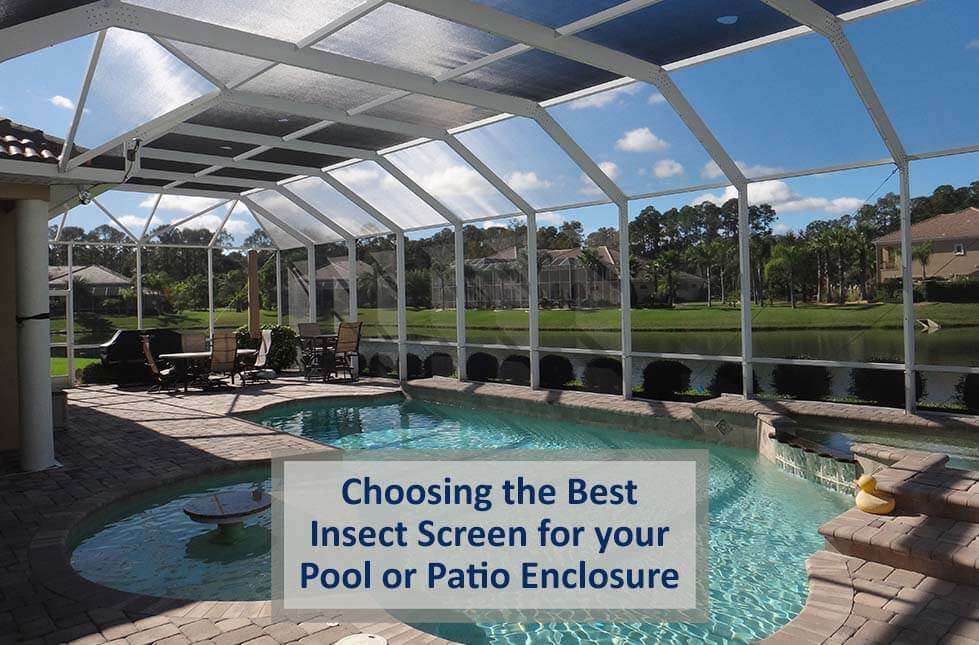
Some insects bite. Others sting. Many can carry diseases and all of them can be incredibly annoying. If you want to stop bugs from bugging you while you’re spending time in your screened pool or patio enclosure, selecting the right insect screen is a must. At Dulando Screen & Awning, we use high-quality screening from Phifer in every custom enclosure that we build. Which Phifer insect screen best suits your needs?
1. 18 x 14 Fiberglass Mesh Insect Screens
We get it. You want insect screening that will keep out bugs. But what about everything else? A well-designed screen can multitask. Do you need a safety barrier? Is there a lot of activity around your pool? Do nearby trees and shrubs shower your pool or patio area with bits of branches and leaves? Phifer’s 18 x 14 Fiberglass Mesh Insect Screens can provide both necessary filtering and extra strength. Phifer’s mesh insect screen is tight enough to keep most bugs at bay while still allowing sunshine and gentle breezes in. Available in charcoal and silver gray, this product is a popular choice that delivers fantastic value.
2. 20 x 20 No See Um Screens
No see ums may not be a scientific name, but most people who spend time outside will know exactly what they are when you use the term. These tiny pests are an outsize nuisance and can ruin a relaxing afternoon even when they don’t bite. While an 18 x 14 mesh will deter most insects, no see ums, gnats, sand flies and other little pests can sometimes slip through it. That’s why Phifer offers a 20 x 20 No See Um Screen. This tighter weave has 20 openings into each linear inch of screening. The 20 x 20 mesh is a charcoal colored vinyl-coated glass yarn. The result is a top-quality screen that will not rust, corrode or stain. Plus, it bars the entry of even tiny bugs without impeding your view of the world outside your pool or patio enclosure.
3. TuffScreen® No See Ums
You want a durable, hard-wearing screen that won’t flinch at high winds, active kids or curious pets. You also want to keep no see ums on the outside of your screened pool or patio enclosure. There’s a Phifer screen for that. TuffScreen No See Ums combines enhanced durability with a tight weave. This versatile product is perfect for areas where there’s a risk of rough-housing or rough weather. Is privacy a concern? Then you definitely want TuffScreen® No See Ums insect screen. While it allows you to see out, it’s dense weave and black color make it harder for your neighbors or passersby to see in.
Regardless of the type of patio enclosure you want, Phifer has a screen for it.
If you’re ready to enhance your outdoor living space by wrapping your patio or swimming pool in a custom screen enclosure, reach out to Dulando Screen & Awning. With our award-winning design and installation services, we know a thing or two about crafting custom screen enclosures that will stand the test of time. Our expert team will work with you to create your ideal pool enclosure and walk you through the entire process. Contact us today at 407-862-6060 to request a free in-home design consultation.
Patio Enclosures, Screen Enclosures
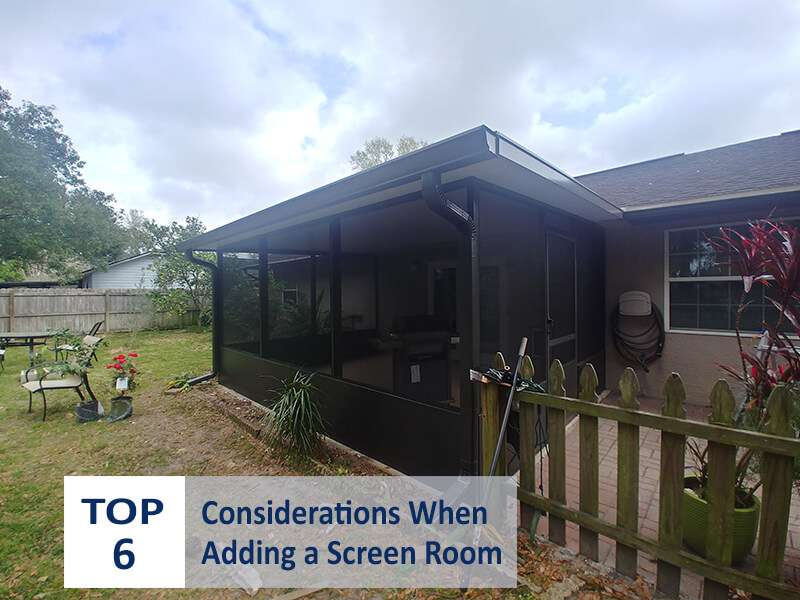
You’ve explored the many advantages of adding a custom screen room to your home, and you’re eager to get started on the project. What should you think about when you’re ready to improve your home with a screened porch or screened patio enclosure?
1. How Will You Use the Space?
Picture yourself using your new space. What are you doing? Screen rooms are incredibly versatile. You can use them as a breakfast nook, an entertainment area, a personal retreat, an exercise spot or a playroom for pets or children. Consider how you hope to use the room when deciding on a design. How much space will you need? Are there particular features like electrical outlets, lighting, ceiling fans or skylights that would make time spent there more pleasant? All of these features must be discussed with your patio contractor prior to construction so they can facilitate placement inside the roof panels.
2. How Will It Connect?
If you’re enclosing an existing porch or patio, you may already have a doorway between the space and your home. If not, where should this entrance be located? What suits your floor plan? How will a new entrance mesh with your outdoor living spaces? Consider how adding a screened-in porch or patio enclosure might impact traffic flow.
3. Is Privacy a Priority?
Would you like to enjoy your new screen room without worrying about prying eyes or nosy neighbors? Landscaping and other natural features can provide a barrier. Alternatively, you can also opt for privacy screening that limits the view of someone on the outside looking in without interfering with your view as you look out. If privacy is a priority, keep that in mind when selecting materials.
4. Is Durability a Concern?
Durability is something to consider if you want a screened room that will provide years of faithful service. This is especially true if you build a patio enclosure or screened porch that children or pets will frequent. Here in the Sunshine State, wind can also be a concern. An experienced screen enclosure contractor can point you toward long-lasting materials that withstand wear and tear without worry and deliver good value.
5. What About Maintenance?
Some materials require more time and effort to maintain than others. Would you rather spend your free time enjoying your new addition or dealing with chores? If you’d prefer a low-maintenance structure, choose materials like aluminum that offer an attractive look and lasting service with minimal maintenance requirements.
6. Why Should You Ask About Insulation?
Why would you ask about insulation if a room’s walls are made largely of the screen? If your new patio enclosure is not under the roof, then maybe consider adding aluminum roof panels to your new screen enclosure. The Florida sun is relentless, but an insulated roof can help to keep the heat out of your screen enclosure. This means that space is more comfortable on hot, humid days. The insulation can also help to soften the sound of precipitation hitting the roof.
Let Dulando Screen & Awning put its award-winning design and installation experience to work for you. Our team includes professional designers, fabricators and installers who will work to build your screen room. We’ll combine our talents to create a custom screen room perfect for your needs. Contact us today at 407-862-6060 to request your free in-home design consultation.
Patio Enclosures
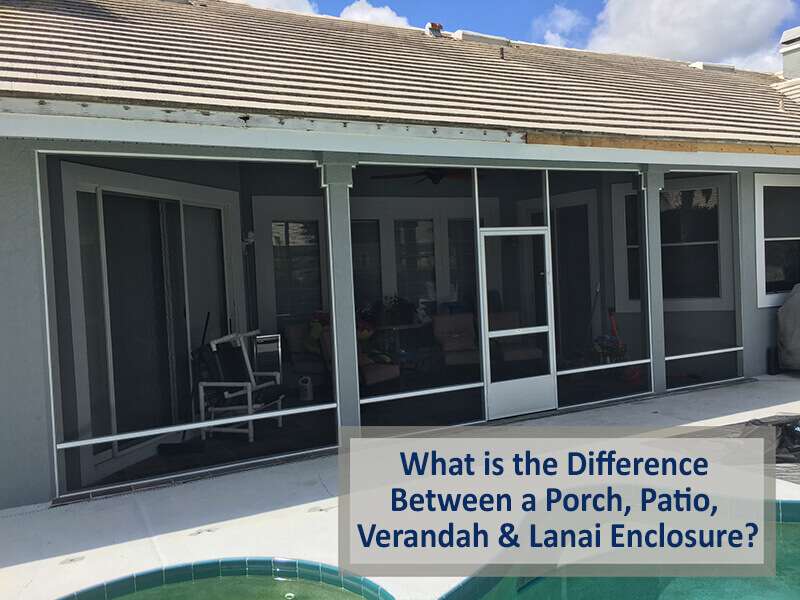
Surrounding exterior living spaces with screen enclosures can create the perfect mix of inside and out. Are you dreaming of a porch or patio screen enclosure? Would a verandah or lanai enclosure make it easier to enjoy the beauty of the world right outside your door? We’ve heard customers use terms such as porch, patio, verandah and a screen lanai enclosure to describe their backyard area. But they all have distinct meanings. Which of these backyard structures would you like to enclose and enjoy?
Do you want a Porch, Patio, Verandah or Lanai Enclosure?
Porches
What makes a porch a porch? For starters, it’s an exterior structure that’s located in front of a doorway to a home or building. Its floor is level with the building’s internal floor and made of wood, brick, concrete or similar materials. While it sits outside the walls of the main house, it can be enclosed by framing, columns or walls. In addition, there’s a roof or covering that provides shade and shelter in the porch area. Why would you enclose a porch? A screened porch can keep bugs, debris and ultraviolet radiation out. This makes your porch enclosure even more enjoyable and pleasant.
Patios
Porches tend to be built even with the building’s ground floor. Patios are built right on the ground itself. A patio is an exterior living space set alongside or near a home, restaurant or other building. A level floor of pavers, brick, stone or concrete creates an open-air room that’s ideal for relaxing, dining or entertaining. Why would you wrap this space as a patio screen enclosure? It lets you continue enjoying the screened patio while simultaneously providing a pleasant degree of shelter and separation.
Verandahs
A verandah is a porch, but not every porch is a verandah. That’s because a verandah is a long porch that extends along one or more sides of a home or building. A verandah is usually under home’s roof and built on the home’s first floor. A verandah is sometimes called a wraparound porch, it’s used for anything from access to entertaining to storage. Screening a verandah adds valuable living space and an ideal spot to enjoy the outdoors regardless of the weather.
Lanais
Porches, patios and verandahs get lots of press. If you tell a friend from anywhere in the United States that you’re about to step out onto the patio, they’ll have a fair idea of what you’re planning. However, saying that you’re spending the afternoon lazing around the lanai could cause confusion. That’s because the term “lanai”, which originated in Hawaii, is mainly used in tropical areas, including the Sunshine State, Florida.
What is a lanai?
The word describes an exterior space with a hard-surfaced floor that is typically set up like an outdoor room. In the right circumstances, porches, patios and verandahs could all labeled lanais. Again, a lanai is usually connected to a backdoor of your home and is under the roof line. When you build a lanai addition, you increase the usability of the space in Florida’s climate.
Fortunately, regardless of what you call all these structures; a porch, a patio, a verandah or a lanai enclosure, they all can provide the perfect base for a screen enclosure.
Are you searching for a reliable screen enclosure contractor? Turn to the experts at Dulando Screen & Awning. A family-owned patio builder with a reputation for quality, we’ve been designing and constructing top-notch screen enclosures for over 50 years. Do you want to build a porch, verandah or screen lanai enclosure? We can help. If you don’t have an existing patio, we can start from scratch to build you an enclosed patio. Whether you want pavers or a concrete slab, we can get the job done beautifully. Contact us today at 407-862-6060 to learn more and request a free in-house no-obligation quote.
Patio Enclosures
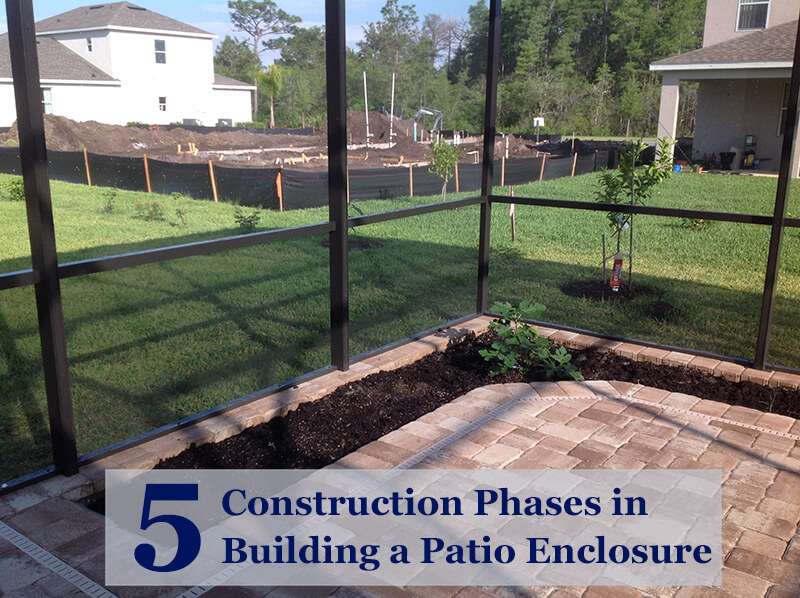
Do you dream about enhancing your outdoor living space with a custom screen enclosure? It’s fun to look at websites with screen enclosure ideas, but construction needs to begin at some point. Knowing what to expect can help you prepare your family and your property. At Dulando Screen & Awning, we’re happy to help you find tons of patio enclosure ideas and walk you through every step of your project. There are five phases of construction when it comes to building a patio enclosure.
1. Preconstruction
When you hire a reputable contractor to build a screen enclosure, the work begins before construction. After choosing your patio enclosure features that suit your needs and your budget, it’s time to deal with permitting and scheduling the project. In Florida, securing the necessary permits generally takes a month or two. However, if a building boom or the aftermath of a damaging event like a hurricane has the local building authorities hopping, it may take longer. The patio contractor can take over once the proper paperwork is in hand.
2. Site Preparation
In any type of construction, a solid foundation is vital. Site preparation lays the groundwork for that foundation. Your circumstances will dictate the details of this phase. If your new patio enclosure is not under a roof with an existing concrete slab, then we need to create the foundation. If you’re starting fresh, it may involve removing plant materials, relocating utilities, excavating, leveling, and pouring concrete. In many cases, an existing patio can jump-start the process. However, if it’s in poor condition, you may need to tear it out and start from scratch. Site preparation typically requires a few days, but the duration of this phase depends on the nature and extent of the work needed.
3. Framing and Fabrication
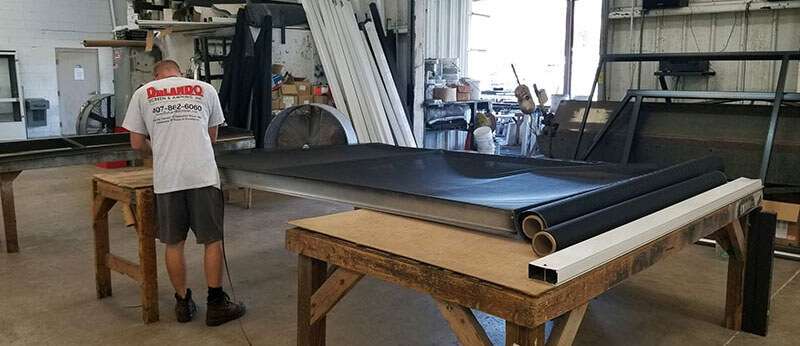
During the framing and fabrication phase, your screened-in patio begins to take form. At Dulando, we normally tackle this portion of the project at our facility. Our expert patio installers prefabricate the aluminum structures needed for your new enclosure under controlled conditions. This lets us provide you with a first-rate product and speeds up the construction phase. Prefabrication minimizes the inevitable disruption involved in building a patio enclosure. It also saves you time and money.
4. Construction
During the construction phase, the framing, screen, and roofing materials are combined by skilled craftsmen to build the patio screen enclosure that you’ve been picturing. The size and complexity of the structure and your contractor’s skill and resources both affect the completion time. On average, this phase takes around five days. Because we prefabricate portions of the structure before arriving on-site, you’ll enjoy more rapid results with Dulando.
5. Finishing
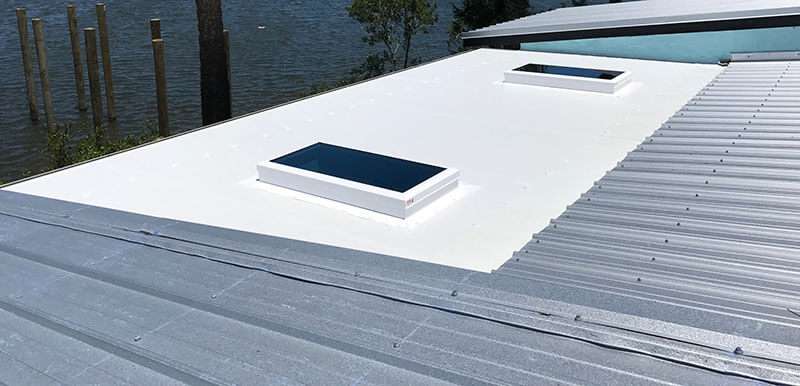
The right finishing touches can help make your new screen enclosure a more pleasant place to spend time. Common choices include installing features like electrical outlets, lighting, and ceiling fans. Remember that if you are interested in any of these features, you’ll need to notify your patio contractor before construction begins so they order the proper materials. Paver bricks or special trims may also be installed during this phase. When only a few items are on the list, the finishing phase may be completed quickly. More extensive lists may add a few days to the project’s timeline to coordinate the upgrades.
At Dulando Screen & Awning, we enjoy working with people to create custom screen enclosures that enrich their outdoor living spaces. We’re here to serve you if you want to build a patio enclosure. Contact us today at 407-862-6060 to request a free consultation.
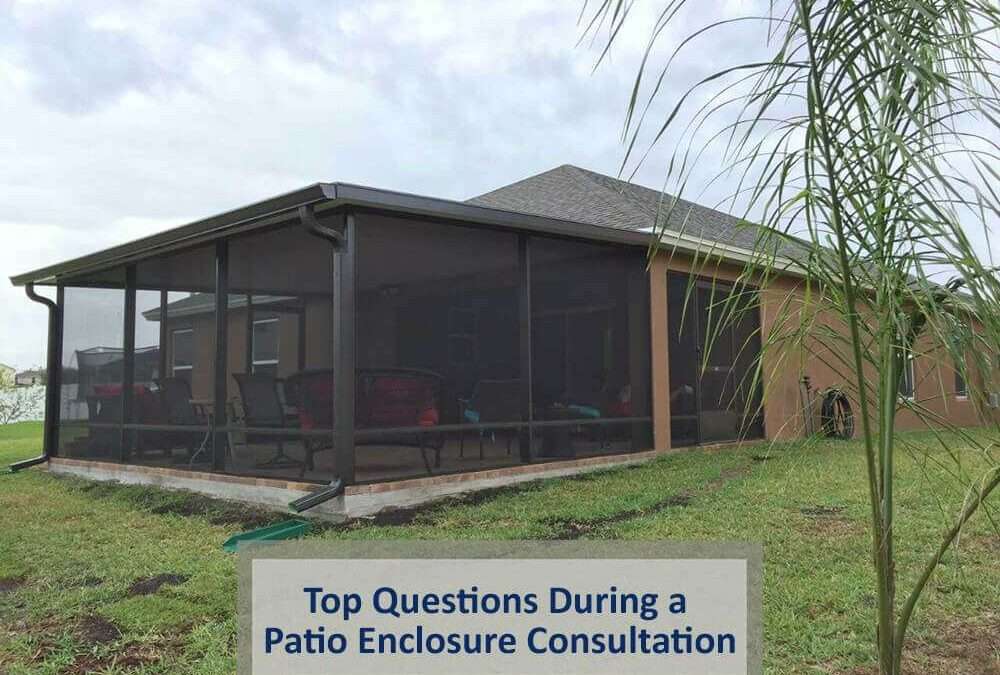
Patio Enclosures
You’ve decided that it’s the perfect time to enhance your outdoor living space with a patio enclosure. If your goal is to reach out to a few reputable patio contractors, wouldn’t it be nice to know what types of questions they will be asking during your appointment? Here is our list of the top questions during a patio enclosure consultation that we’ve been known to ask our clients. Hopefully, this list gives you a few items to consider as you get ready for the meeting.
An effective patio enclosure consultation isn’t an interrogation. It’s a conversation. An experienced patio enclosure contractor will be happy to answer your queries. They will also have questions of their own, and that’s a good thing. After all, your answers will help them create and build the patio enclosure that you want. What is a contractor likely to ask you during a consultation?
How Do You Plan to Use the Patio Enclosure?
- Are you seeking a quiet refuge or eager to use your screen enclosure to entertain?
- Will it be a place to dine?
- Who will use it?
- Are children or pets likely to be frequent visitors to the space?
Understanding how you plan to use the enclosure allows a contractor to make helpful suggestions regarding the size and placement of the enclosure, the type of materials used to build it, and the features that might make it more comfortable.
Where Will the Patio Enclosure Go?
- Is the enclosure that you’re dreaming of attached to your home or freestanding?
- How large will it be?
- Are you planning to enclose an existing patio? If so, is the existing patio under the roofline?
- If you have an existing patio under the roofline, do you want to extend it further? (yes, that’s an option) See this article. How A Patio Extension Screen Enclosure Can Increase Your Living Space
To create an effective design and an accurate estimate of its cost, the contractor will need to assess and measure the proposed location.
How Do You Visualize your Patio Enclosure?
Even the most talented contractor cannot build your ideal patio enclosure without first learning what you want. Be prepared to discuss what you like and what you don’t. During a patio enclosure consultation, contractors often bring pictures and samples to make it easier to determine what styles, materials and features suit your personal tastes. Of course, feel free to show them photos you’ve also found online.
What Are Your Priorities?
- Are you concerned about energy efficiency?
- What about privacy?
- Are low-maintenance materials a plus in your book?
- Is electricity a necessity?
Exploring what matters most to you gives your contractor a clearer picture of your needs.
How Much Are You Planning to Spend?
Discussing your budget may not be as much fun as exploring design possibilities, but it’s a vital part of the patio enclosure consultation. When you share how much you’re willing to spend, your contractor can give you a realistic idea of what type of enclosure you can afford. More importantly, they can use their expertise to help you get the most value for your dollar.
Patio Enclosures, Pool Screen Enclosure
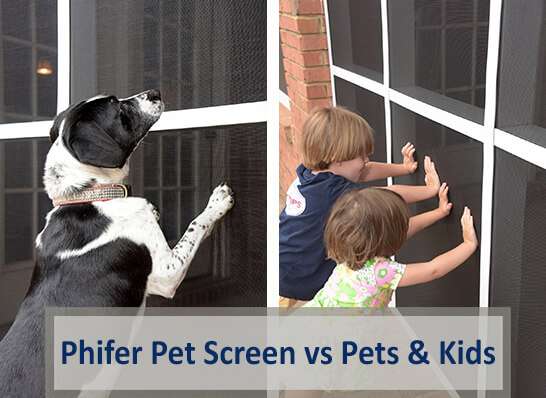
Enclosing your pool or patio with a screen may seem like an obvious decision. However, it’s important to pick the right type of screen for your situation. If you have pets or children, pet screen offers superb durability and other features that are unmatched by standard screens.
Is Pet Screen Worth It?
Long-lasting Strength
The claws and teeth of your cute but ferocious cat are not to be underestimated; standard screens can’t keep up with these sharp implements, especially over time. Regular screens can put up with some damage, but pets are notoriously stubborn. Eventually, they can shred through inferior screens and claw their way to ill-conceived freedom. Pet-proof screen is 7x stronger than the standard screen.
The durability of the framing used in pet resistant screens is important as well. A pet or child with enough strength can push a traditional screen out of its frame, allowing an easy escape. Screens designed with pets in mind are constructed with durable screening material and strengthened frames, allowing them to withstand years of abuse from the most determined pets.
Good Visibility and Airflow
Some homeowners may balk at the idea of putting up thicker screens, believing that these screens will negatively impact their visibility when compared to regular screens. Although the individual strands within a pet resistant screen are thicker, the gaps between the strands are wide enough to see through easily. You’ll still be able to enjoy plenty of beautiful sunlight shining into your enclosed space. The airflow in your enclosed areas also will not be affected; cool breezes will continue to help you feel refreshed.
Keep Pests at Bay
Although the main purpose of pet screens is to keep pets and children inside, they can also keep annoying pests outside and away from your skin. The mesh in pet screens are small, preventing mosquitos and other biting or stinging pests from feasting on you and your family. Not only can pet proof screen keep your dog or cat from clawing its way free, but it is also strong enough to resist gnawing from larger pests, such as squirrels or rats from getting in.
Safety for All
Pet safe screen enclosures improve the safety of your family and your neighbors. Even if your dog is well trained, he can still behave unpredictably when spooked. A strong pet screen will keep your dog enclosed even when he charges at the screen. This same strength is an added benefit if you have young children. With weaker screens, an unattended child could break through your screens quicker than you might expect, especially if there is already a tear in the screen. The strength of your pet screening will prevent a child from getting through the material and wandering off.
Durable Material
The best pet proof screen is Phifer pet screen. To create a tear proof screen, Phifer screens are built from a vinyl-coated polyester that will hold up to regular abuse. The fabric of the screen uses an antimicrobial coating from Microban to prevent the growth of unsightly bacteria and mold. Excessive mold growth can prematurely weaken screens, so this is just one more way that pet screens are designed to last.
Phifer is the Best Pet Screen
If you have pets or young children and want to give them access to your screened patio, durable Phifer pet screens are a necessity. For more information, contact Dulando Screen & Awning today at 407-862-6060 and speak to one of our design consultants for a free quote.
Page 3 of 9« First«...234...»Last »