Patio Enclosures, Screen Enclosures
Screen rooms don’t have to be boring boxes framed with fragile screens that are prone to dents, tears, and rust. With clever design, modern-quality materials, and solid craftsmanship, a skilled screen enclosure contractor can deliver custom screen rooms that are fun, practical, attractive, durable, and the perfect fit for your home, lifestyle, and budget.
Central Florida is naturally gorgeous. Homeowners here can certainly appreciate the appeal of a low-maintenance outdoor living space. Screen rooms allow you to enjoy the beauty and feel of being outside in greater comfort. Modern screens protect people from nuisances like bugs, sun, and debris without sacrificing the view. Therefore, one of the keys to creating the ideal screen room is finding the design that makes the most of your space. There are many possibilities. Here are a few ideas to inspire you.
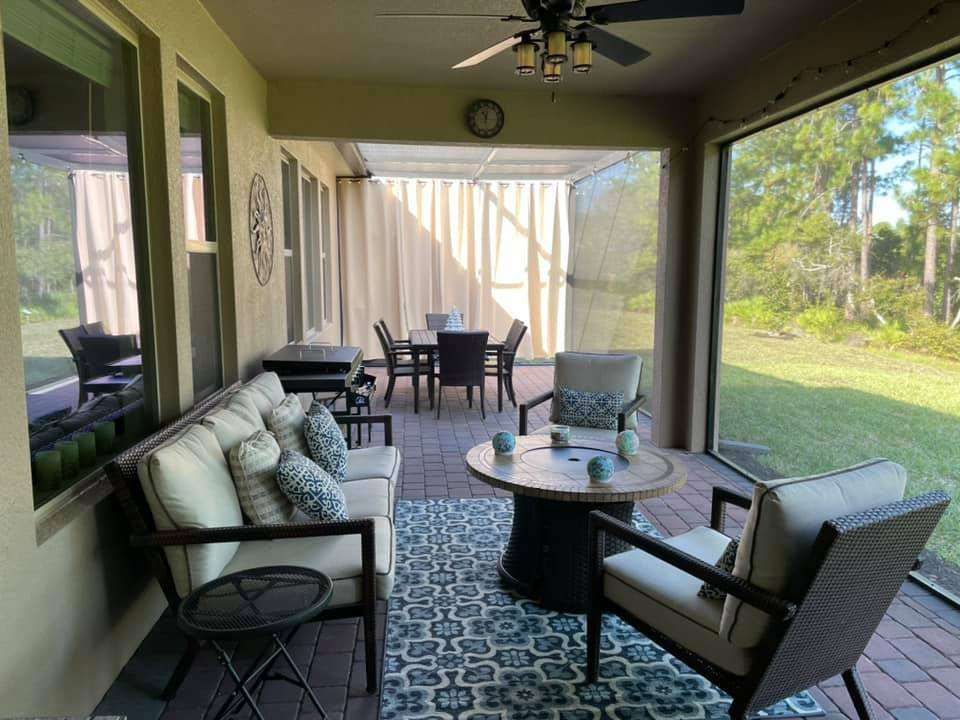
Enclose Your Existing Lanai or Porch
Would you use your porch more frequently if it weren’t for annoyances like pollen and no-see-ums? A screened in porch can eliminate these issues. It also increases your comfort level by adding features like ceiling fans, entertainment options, upgraded furniture, and nicer flooring. Would you like to share the space with children or pets? Choose a screen to withstand their energy, and you’ll create a safer place for them.
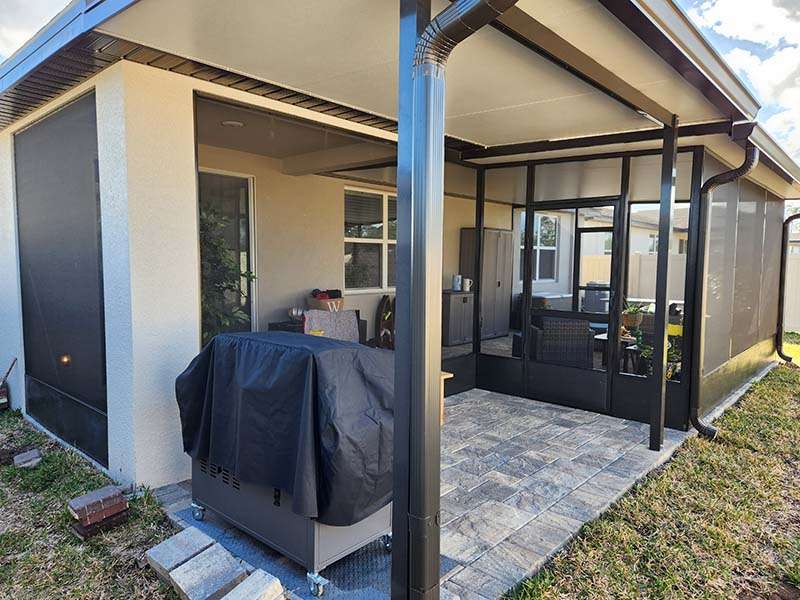
Split Your Patio Between an Enclosure and a Kitchen
If you’re a fan of cooking outside, you’ve probably had more than a few al fresco meals ruined when Florida’s humidity sparked sudden showers. Solve the problem by splitting a patio. Leave one section open for an outdoor kitchen and fully enclose your dining or living space. Patio screen enclosures are ideal places to enjoy outdoor spaces whether the skies are sunny or gray. They provide shade when the temperatures soar and offer cover if things start to get soggy. You’re able to use your patio without worrying about the weather.
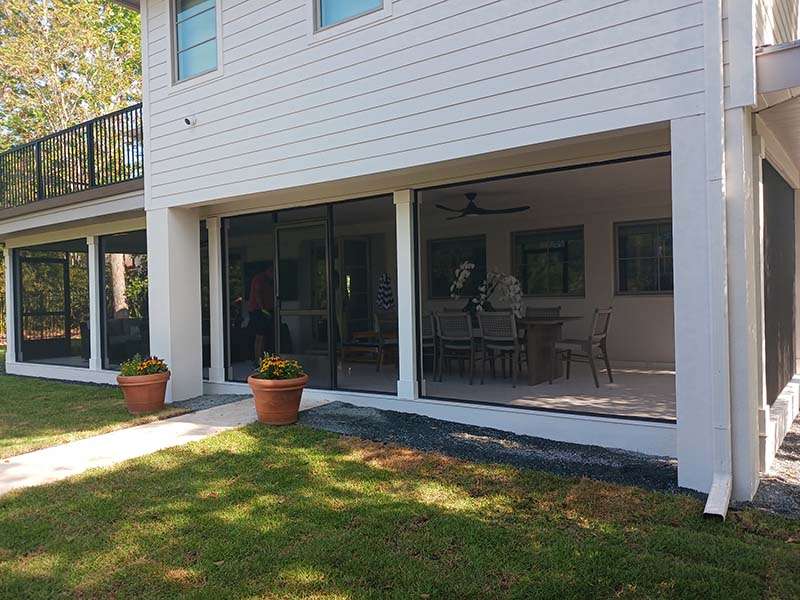
Turn the Space Beneath Your Second-story Deck Into a Screened Room
You may have more than a gorgeous vantage point if you have a second-story deck. You might have the opportunity to create a screen room below the deck. Installing a patio and screening this space would provide additional room for relaxing, entertaining, and more. Why not capitalize on every possible inch when you love outdoor living space?
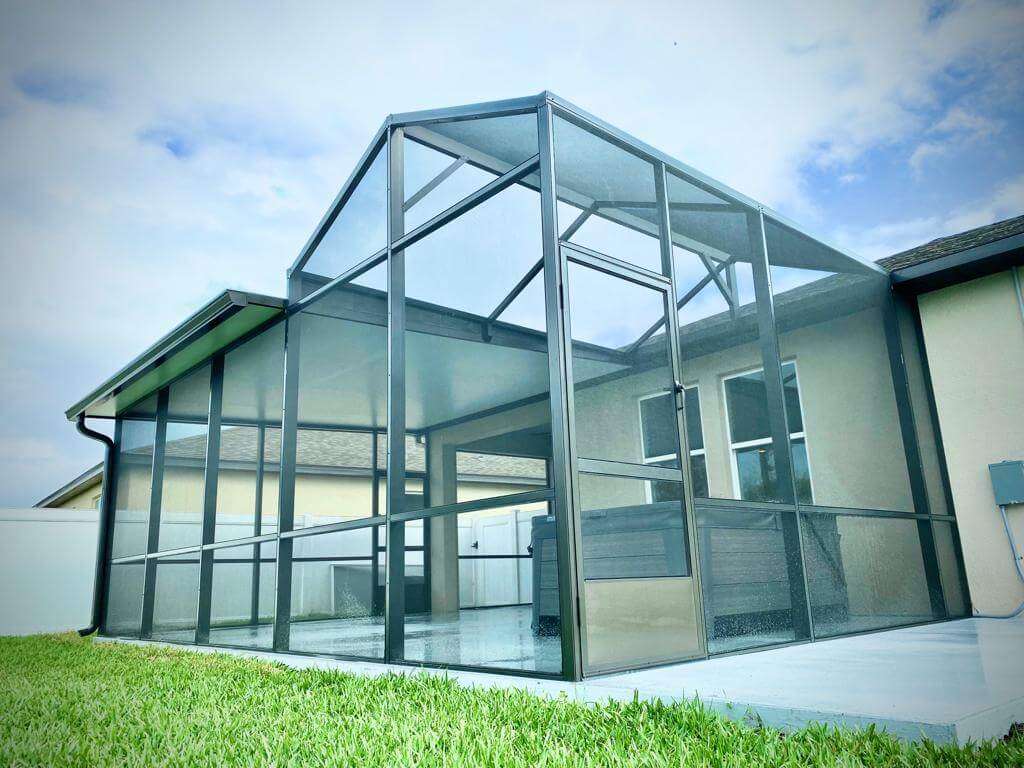
Create a Combination of Spaces
Are you struggling to decide whether you want a deck or a patio? Why settle for a single space? A skilled designer may be able to help you evaluate your location and lifestyle to create a layered solution. For example, you might exit your home onto a screened deck. This ensures you have an outdoor space with excellent protection and privacy. Then, the deck could exit onto a patio that offers seating around a fire pit. This second space delivers more openness and a fantastic view of the stars.
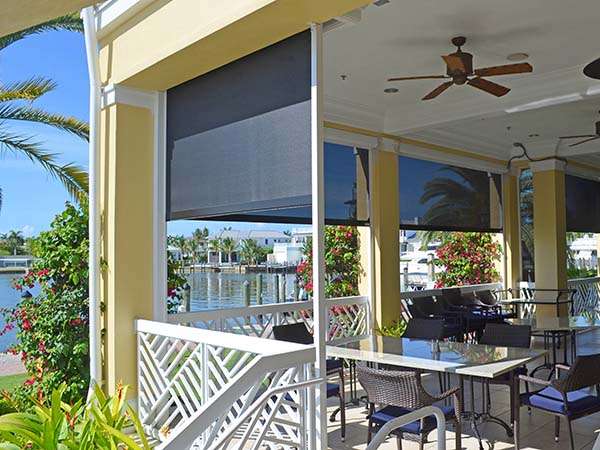
Use Retractable Screens for Maximum Flexibility
Space is tight at your home. That doesn’t mean that you must choose between the advantages offered by screen room enclosures and the freedom of an open deck or patio. Retractable screens open and close at the touch of a button. When flexibility is important to you, they give you control of your outdoor living space.
Are you Ready to Build your Screen Room?
Dulando Screen & Awning has been crafting innovative solutions for our fellow Floridians since 1968. With our firm commitment to using quality design, skilled craftsmanship, and the best materials, we deliver custom screen enclosures that will stand the test of time. Contact Dulando Screen & Awning to schedule a free in-home design consultation to learn more.
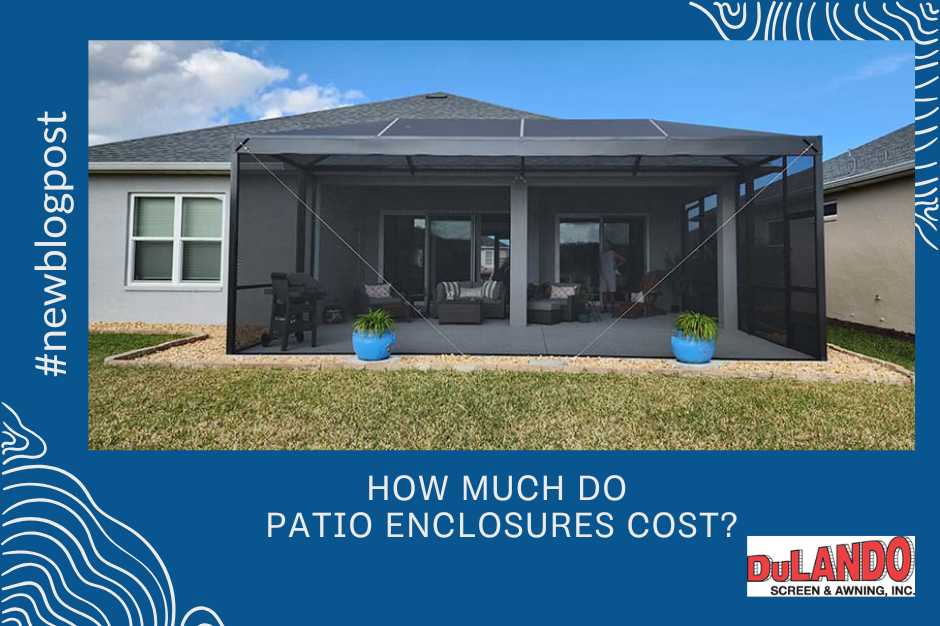
Patio Enclosures
It’s easy to dream about your perfect patio enclosure and its many advantages. However, the cost plays a major role for most homeowners when deciding to proceed with a project. Therefore, it’s only natural to ask what patio enclosures cost when exploring the idea of building a new one.
The short answer is that your choices determine the cost. Various factors can shift the price of a patio enclosure higher or lower. Working with an experienced screen enclosure contractor will help you secure the best value. If you want to work out a rough estimate before you approach a professional, it helps to know your location’s current screen room enclosure cost per square foot. The average cost per square foot in Florida is $10 to $24. Let’s break this down.
Pricing Patio and Porch Enclosures
The price range for patio screen enclosures has a bit of wiggle room. That’s because numerous variables can impact the price of your project. Here are a few major ones:
- What size enclosure are you planning?
- Do you need specialty screens? Or just the regular 18×14 screen?
- Is your existing patio under your existing roofline? Or do you need a roof?
- What type of floor did you have in mind?
- Will the enclosure be a new construction or incorporate existing structures?
- Are there unique features you’d like to add?
Recognizing Factors in Pricing for Patio Enclosures
Because every patio enclosure is unique, installers cannot provide accurate estimates without seeing your space. In preparation for your consultation, here are some of the factors that impact screened enclosure pricing. We hope this will help you understand how the pricing works.
- Size matters. Bigger screen room enclosures generally cost more and require more resources. The average patio enclosure is roughly 100 sq ft or 10×10. If you need more space, you can expect to pay a bit more.
- Materials count. The materials you choose impact the price. For example, any Phifer Screen is a quality product. Selecting pricier picks like Phifer Sunscreen or Phifer Pet Screen will raise your cost. Is a screen roof or an aluminum roof best for your purposes? They’ll have different effects on your budget.
- Beginnings tally. If you’re starting with a blank space, you’ll need to build everything. You’ll enjoy savings if you’re enclosing an existing patio, deck, or porch. Some of the structure will already be in place. How many walls need to be constructed? If your lanai is under the roof, then you’ll require fewer walls and screens.
- Features factor. We want your new patio enclosure to feel like an extension of your home. Therefore, don’t forget additional features such as electrical outlets, ceiling fans, and paver floors bring amazing value. They also add to the cost.
Surveying Enclosure Examples for Potential Price Ranges
Transforming a deck into a screen porch has a potential return on investment of 80% to 120%. What kind of investment is needed to produce a quality patio enclosure? Use these examples to explore the possibilities:
- Lower price range: For a trim budget, enclose an existing structure. This reduces labor and material costs.
- Middle price range: If you’re starting from scratch and price is a concern, opt for a modest size. Choose a quality screen that delivers the characteristics you want most, especially if you have pets or small children. Investing in a higher-quality screen will have better cost savings over time. Lastly, select a few special features carefully to get great value.
- Higher price range: With a freer hand, upgrades of all kinds are doable. Go larger. Switch the concrete pad to concrete pavers. Incorporate more unique features. Not everyone is in this position, but if you are, then have fun and create a backyard oasis.
Screened enclosures are a perfect fit for the Sunshine State. We hope this list has helped you understand the costs when evaluating patio enclosures. When you’re ready, Dulando Screen & Awning can help you create a patio enclosure that fits your space, your needs, and your budget. Contact us today to schedule a free in-home design consultation.
Patio Enclosures, Screen Enclosures
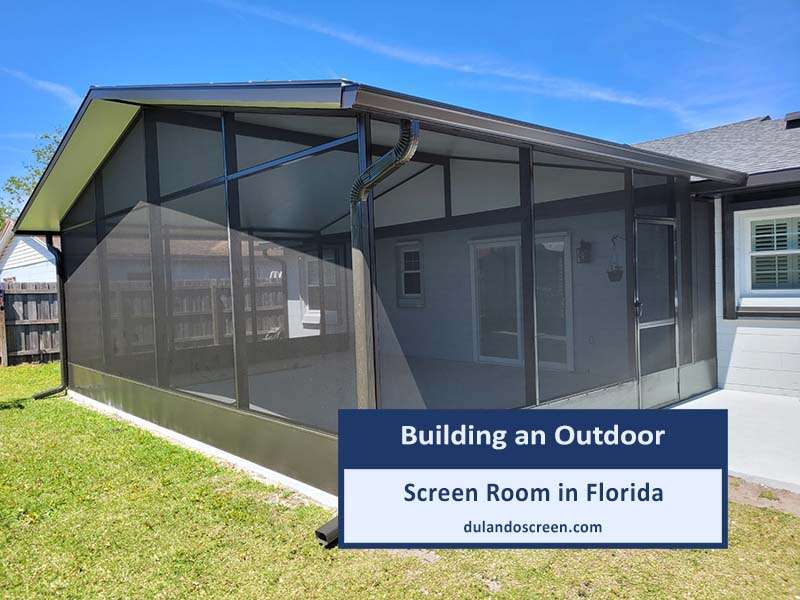
Outdoor screen rooms are ideal when you want to enjoy the outdoors in Florida without pesky nuisances like insects, debris, or excessive sun. These structures allow you to soak up the pleasures of being outside, and they provide enhanced comfort, greater privacy, some protection for children and pets, and a bit of shelter from the elements. What goes into building an outdoor screen room? As your screening expert in the Orlando area and most of central Florida, Dulando Screen & Awning is delighted to guide you through the process.
Components of an Outdoor Screen Room
Types of Screen Room Frames
Like a skeleton, the frame serves as the support structure for your screen room enclosure. Popular options include:
- Traditional frames are meticulously crafted with sturdy aluminum beams. This user-friendly, low-maintenance material is a fantastic fit for Florida. Lightweight but strong, it resists pests and corrosion with ease. You’ll enjoy an attractive frame that’s available in various colors.
- Panoramic frames are the perfect way to highlight a gorgeous view. Ingenious engineering and robust aluminum beams allow supports to be placed farther apart, so there’s less interference with your view. In fact, the distance between supports can be up to 24 feet.
Choosing a Screen Room Roof
What kind of roof will top your screen room? Before you decide, talk with your screen room contractor. There are many possibilities and many factors that can shape your choice. For example, you’ll want to weigh your preferences, your home’s design, the layout of your screen room, and your budget. The kind of screen room you’re building is also a consideration. Patio covers, screened porches, and Florida rooms often have solid roofs. In contrast, pool screen enclosures normally feature screen roofs.
When envisioning your outdoor screen room’s new roof, it may help to think of popular roof styles:
- Gable roofs look like a triangle. Two sloping sides meet at the top to form a ridge.
- Mansard roofs have flat tops with two slanted sides. It’s a strong design that creates lots of space.
- Dome roofs use arches to create an airy but durable structure.
- Single-slope roofs have one slope that’s angled in one direction.
- Custom roofs are designed to meet the unique needs of a specific situation.
Quality Screen Materials
You can’t achieve excellent results without quality materials, so Dulando always uses Phifer screening. These amazing screening materials deliver serious advantages. Attractive and durable, they’re great at keeping insects and debris out. Do you have pets or small children, we recommend Phifer Pet Screen. If you’re looking to reduce the suns UV rays, great options are Phifer SunScreen and Phifer SuperSolar. Talk to your design consultant about your needs and we’ll find the right screen materials for your new outdoor space.
The Extras
The extras are the things that will make your patio screen room the place your family wants to be. They’re the details that transform your screen enclosure into an outdoor living space. It could be electrical outlets, lighting, skylights, or ceiling fans. It could be high-quality hardware that’s placed for maximum function as part of your screen room installation. What features are you seeking? Whatever they are, discuss these extras with your screen room design consultant. Many features need to be built during fabrication of the enclosure instead of during installation.
At Dulando Screen & Awning, we offer free in-home design consultations so you can fully explore the possibilities with an expert. We encourage you to dive deeply. We take pride in providing superior service and excellent screen rooms that bring families years of joy, so we want to get things right. Contact Dulando Screen & Awning today to discuss your outdoor screen room.
Patio Enclosures, Screen Enclosures
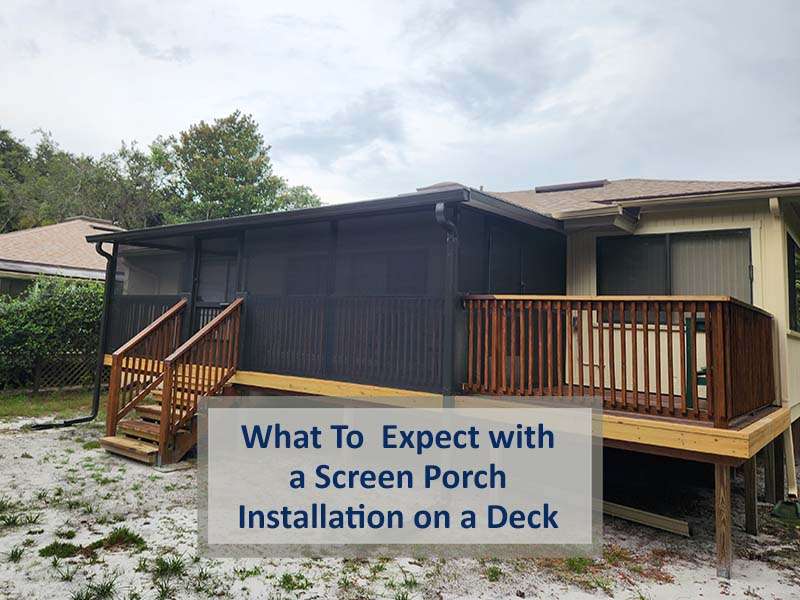
Decks are delightful, but upgrading to a screen porch provides greater protection from common nuisances like biting bugs and bad weather. If you’re interested in a screen porch installation to enjoy more shade, privacy and security, here’s how to start the process.
Building a Screen Porch on a Deck
What Do You Want
How do you currently use your outdoor living space? Once you have a new screened-in porch, what else do you need to function comfortably? Will you need features like electrical outlets, lighting, or skylights? Do you still want an outside area for grilling or other activities best done under an open sky? Getting your ideas together first makes planning and designing smoother. It also helps you avoid the cost of expensive change orders during construction.
Inspect the Deck’s Foundation
Any new structure requires a solid foundation. A screen porch is no exception. Before moving forward, evaluate your existing deck’s foundation and overall condition. When considering deck enclosures, it’s vital to remember that adding a roof and screened walls to a deck also adds significant weight. Assessing the existing structure thoroughly is imperative to see if it is up to the task. If not, you’ll know you need to plan for repairs, modifications, or replacement.
Decide on Sizing for the Screen Porch Enclosure
How big will your new screen porch be? The answer isn’t necessarily determined by the size of your existing deck. You could use all or a portion of it. You could add on or tear it down and start over. For the best results, your wants, needs, and budget should be the deciding factors in the size of your new enclosure. After all, the goal is to create a quality screen porch that fits your lifestyle.
Determine Your Budget
Calculating what you can afford allows you to determine the boundaries of your project. It’s fun to dream about the possibilities, but it’s wise to stay within a reasonable budget. Determine the features you want on your screened-in patio first. That way, you’ll be ready to talk to a reputable screen enclosure contractor. These professionals are familiar with all the ins and outs of converting a deck to a screen porch, so they can help you make the most of your budget.
Ensure Approvals Are Obtained
While you’ll want the final say on the design, your approval isn’t the only one necessary. If you live in an area with a homeowner’s association, be aware that you may need your HOA’s approval for an improvement project. In addition, Florida requires construction permits. Inspections may also be necessary if you are incorporating electrical work. A reputable contractor will often arrange permitting and inspections, but checking with them is wise.
Prepare for Screen Porch Installation
Screen enclosure installations are quite significant, so prep work paves the way. For starters, utility companies will be out the preceding week to mark all public utility lines. Are private lines in the installation area, like irrigation or service lines, running from your home to outbuildings? It is your responsibility to mark them. You’re also tasked with clearing personal property of the area. In addition, you may also be asked to point out where materials for the job can be placed. Materials for deck screens are often delivered a day or so before the installation.
We realize this seems like a lot to consider. That’s why you can depend on Dulando Screen & Awning to walk you through the process every step of the way. We’ve been doing this since 1969, so lean on our experience. If you’re interested in a screen porch installation on a deck, our team will be delighted to help you make the change. To explore your options, contact us for a free in-home design consultation.
Patio Enclosures, Pool Screen Enclosure, Screen Enclosures
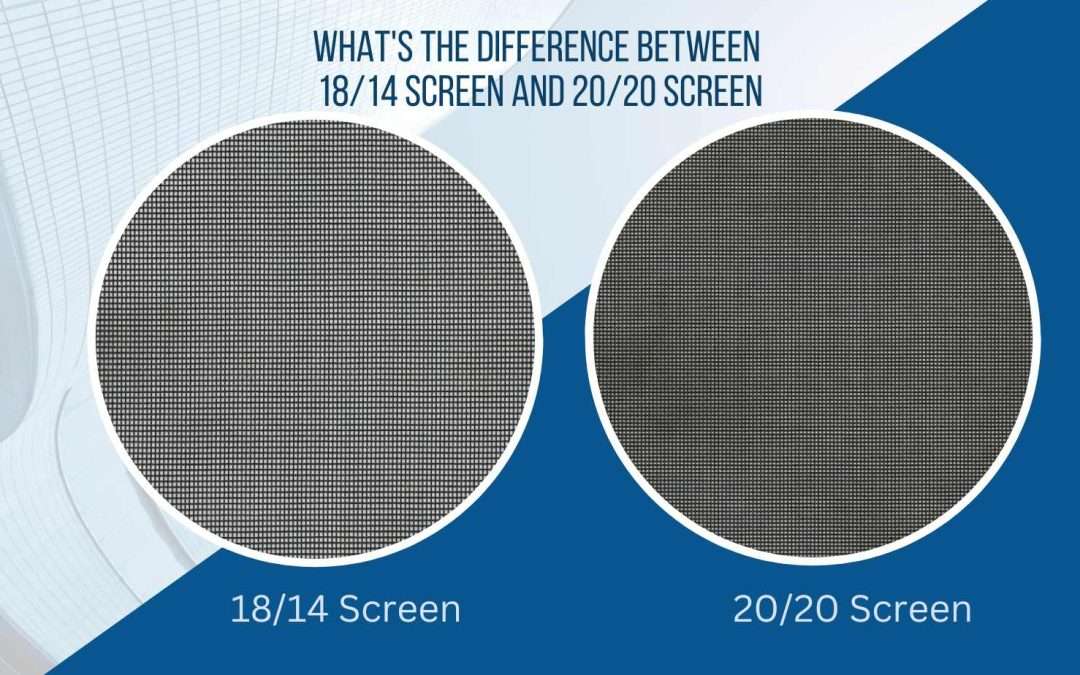
When building a patio or pool screen enclosure, the most popular screen options are an 18/14 screen mesh or a 20/20 screen mesh. Both options offer terrific visibility and a variety of other benefits. Let’s explore the differences between an 18/14 screen and a 20/20 screen.
Taking Count
Practicality leads the way when it comes to naming certain types of screens. If you need proof, consider this: 20/20 screens contain 20 openings per inch horizontally and vertically. What does this mean for 18/14 screens? If you look closely, you’ll find 18 rectangles per inch across. Meanwhile, 14 rectangles stacked together will total an inch.
Exploring the Differences
The differences in the density of the screen mesh are slight, but they’re important. In order to pack more openings in the same space, 20/20 screening has smaller openings. Anyone searching for insect screen can opt for either 18/14 or 20/20 screening because their tight weaves will keep most flying insects out while still allowing plenty of fresh air to flow through. However, the tighter weave of 20/20 screens offers protection from more pests. The 20/20 screen is sometimes called a no-see-um screen because it keeps tiny pests like no-see-ums, sand flies, and gnats out of your screen enclosure.
Contemplating Quality
You’ll want to consider screen mesh size when you’re shopping for screening for your porch, lanai, screen room, screened patio, or pool cage. Still, it’s not the only thing to think about. Quality is a clear concern. Inferior screens constructed from cheap materials may seem like a bargain, but they tend to be less effective and come with shorter lifespans. Dulando Screen & Awning offers Phifer Screen because we know that quality materials deliver real value.
18/14 mesh screen
Our favorite 18/14 screen is crafted in the United States from durable fiberglass mesh that easily lasts for up to a decade. This 18/14 mesh is suitable for swimming pools and patio enclosures. Our most popular colors are charcoal and silver gray, making it an attractive choice for homeowners. The strength of an 18/14 mesh can easily protect your space from windblown debris and insects.
20/20 mesh screen
20/20 screen is the top choice when battling no-see-ums and other tiny pests. Woven from a permanent glass yarn coated with vinyl, this charcoal-colored fiberglass screening provides practicality, flexibility, and beauty. With a lifespan comparable to other high-quality screen products, it won’t rust or stain. The 20/20 mesh allows for good ventilation, provides superior insect protection, and enhances privacy. However, the higher screen mesh does not sacrifice visibility.
It’s easy to assume that screens are interchangeable. The differences are subtle, so it can be hard to detect them at a glance. However, modern patio screens can vary widely in quality, capability, and longevity, so it’s essential to look closely at any screening that will be used for your new screen room. Whether you’re seeking escape from insects, extra durability, protection from the sun, or enhanced privacy, there’s a screening product for that.
Additional Reading: Types of Phifer Screens
If you have more questions about choosing the right screen mesh for your new patio or pool enclosure, give us a call. Dulando Screen & Awning takes pride in designing and constructing quality custom screen enclosures that bring pleasure and value to your space. Our expert team will be happy to help you explore your options. Contact us today to schedule a free in-home design consultation.
patio contractor, Patio Enclosures, Screen Enclosures
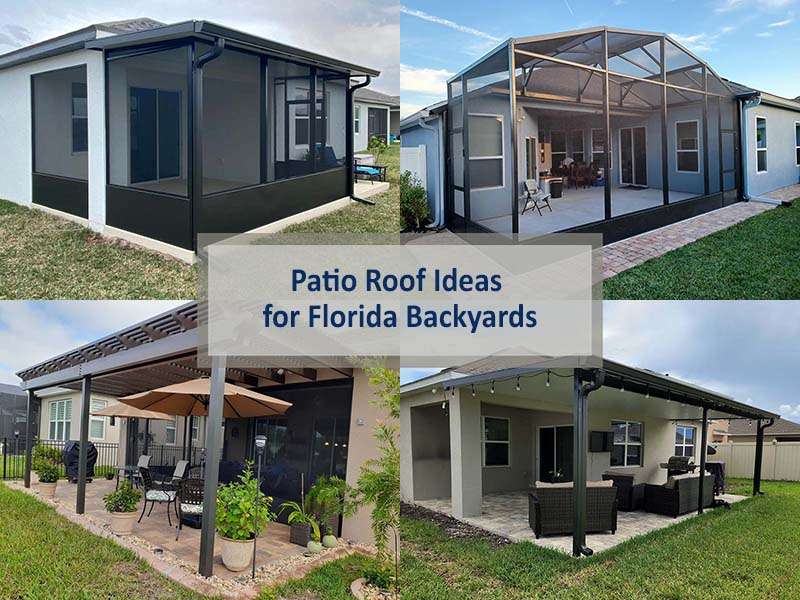
Florida is one of the most ecologically diverse states in the nation, and it has a well-deserved reputation for gorgeous scenery and delightful weather. However, those of us who live here know better. We know the sun can bake us alive, and the mosquitoes will eat us. LOL Therefore, we build patio enclosures to help protect us and make the most of our outdoor living spaces. Fortunately, an attractive climate opens the door to numerous intriguing possibilities when weighing patio roof ideas. Exploring your options can help you decide which of the many available patio roof designs best fits your unique needs.
Florida Favorites – Patio Roof Ideas
 Insulated Roof Panels
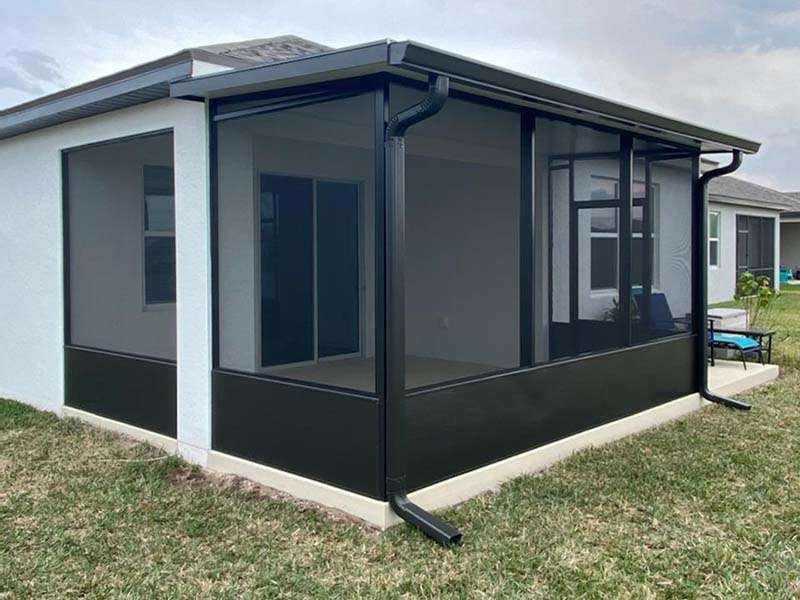
Insulated aluminum roof panels are a smart pick when you want a fully enclosed patio enclosure. These insulated roof panels do a superior job of blocking the sun’s scorching rays, which keeps the space below cooler and more comfortable. Aluminum patio covers also protect the people relaxing below from harmful sun damage. Insulated panels are a great pick whether you want an open-air or a screened patio.
At Dulando Screen & Awning, we rely on Structall Snap-N-Lock Insulated Panels. These high-quality panels are available in numerous sizes and colors, which ensures that you have extensive design options. They work beautifully for almost any roof pitch or project, hold up well against Florida’s stormy weather, and deliver impressive durability so you can enjoy your investment for years.
Screen Roofs
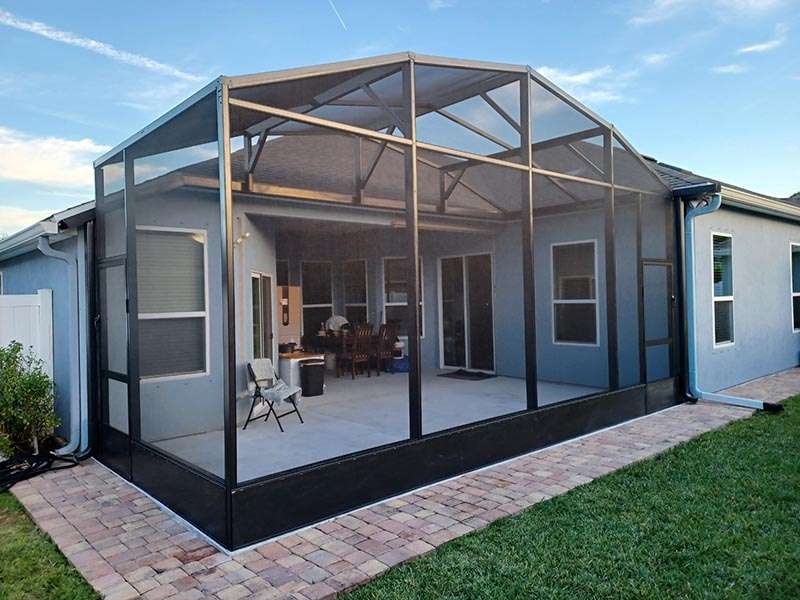
A screen roof won’t necessarily block out the sun or the rain like a solid roof, but it can keep bugs, debris, and many other annoyances at bay. That’s why screen roofs are often the type of patio extension found over pool and garden areas. If your priorities favor a screen topper, don’t overlook the quality of the screening material.
Dulando uses trusted Phifer screens for our products. With different screens for different needs, you can select the screening product that’s ideal for your purposes.
Pergolas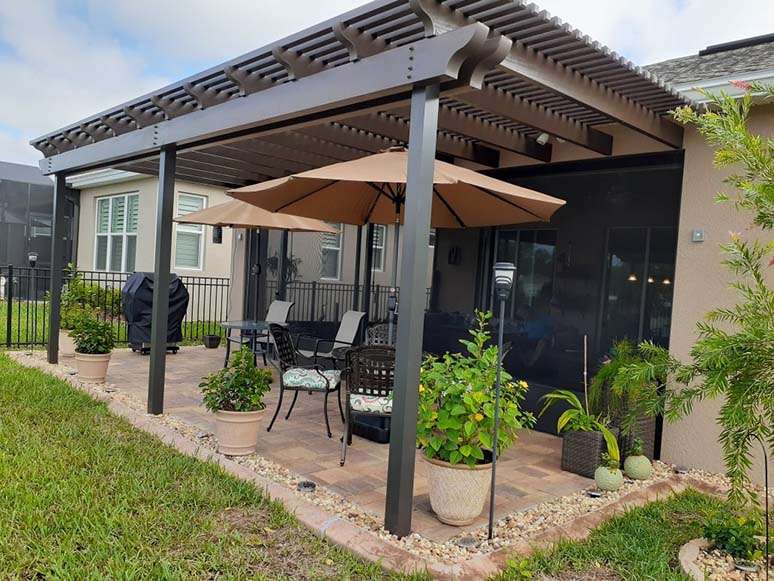
When it comes to distinctive patio roof designs, pergolas always seem to make the list. These backyard structures feature roofs with a strong grid pattern that resembles open weaving. They are a favorite among homeowners who want an open backyard concept.
Dulando offers custom pergolas crafted from PermaWood. This no-maintenance material mimics the look and feel of cedar but does not require the demands of wood. It never needs painting and resists pests, rust, rotting, warping, and splitting. With fewer worries about upkeep, you have more time to unwind.
 Aluminum Awnings
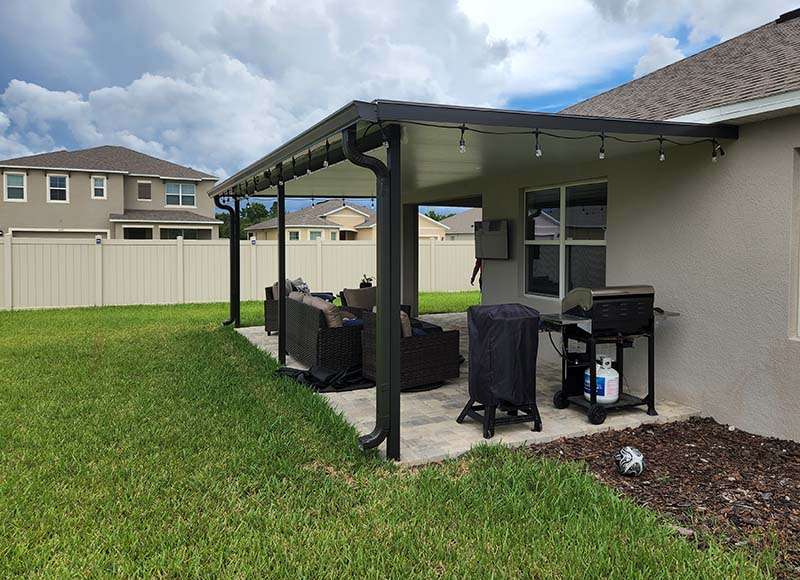
An aluminum awning is an effective solution when you want a clean look that provides generous shade for your patio without demanding a lot of maintenance. It can block direct and indirect heat, keeping the space beneath the covered patio and your home cooler.
Dulando specializes in creating custom aluminum awnings. These quality backyard patio covers enhance your property’s appearance while making outdoor spaces more pleasant.
Which Patio Roof is Best for You?
At Dulando, customer satisfaction is our top goal. To achieve it, we combine excellent customer service, exceptional design and craftsmanship, quality materials, and a commitment to doing the job correctly. Contact us today to schedule a free in-home design consultation to explore patio roof ideas for your project.